
Krishna is knowledge object of knowledge and objective of knowledge
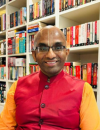
[Srimad-Bhagavatam class at ISKCON, Chowpatty, Mumbai]
Video:
Transcript
This is an AI-generated transcript and may contain some errors.
Hare Krishna I am extremely sorry for being late somehow I had no idea that I was to give class today I was in a national call it was my misunderstanding somehow so I am sorry about that so here the Uddhava Gita is going on and the section which is the verse describes that he wanted to know the truth so I will talk about three things over here the knowledge purpose of knowledge and the object of knowledge Krishna when he is describing the vision of the people who realise spiritual truth through the process of Jnana he uses three terms over here Jnana is knowledge Jnana is the object of knowledge and Jnana Gamyam Jnana Gamyam is the we could say the objective of knowledge or the goal of knowledge so here what is the difference between the two the object of knowledge and the objective of knowledge that means object of knowledge is we study some subject so for example a student may study engineering in college now most people who get into engineering nowadays it is not that they have any special love for engineering their love is we want to get a good job we want to have a good career so the money that they are going to earn from it that is their objective so the object of knowledge and the objective of knowledge are two different things for them what we are studying and why we are studying are two different things but for the spiritually realised person which is being described in the section of the Bhagavad Gita 13.13 to 19 they see Jnana Jnana Ganya and Jnana Gamyam all three as the same that means they see that knowledge, the object of knowledge and objective of knowledge are all same they are all Brahman, they are all spiritual they are all the divine manifesting in this world or manifesting beyond the world depending on what is the subject that we are studying so the word Tattva Jignasa or Brahma Jignasa this comes repeatedly in the scriptures especially the scriptures which focus on transcendental truth and we see Athato Brahma Jignasa is what the Vedanta Sutra begins with and Shri Prabhupada explains Athato Brahma Jignasa as Athato, therefore, now that you have got a human form of life Baldev Diyabhushan in his Govinda Bhashya commentary explains Athato as that the Vedanta, there are six systems of knowledge in the Vedic school of thought in Vedic study so after one has studied all the other books so for example, Germany’s Sutra that begins with Athato Dharma Jignasa now let us know what is Dharma so each of these sutras, they begin with a particular object of knowledge but now, the Vedanta Sutra says that now that you have studied all these other things now come to the ultimate reality, now study about Brahma so the Bhagavatam also says Tattvo Jignasa, it talks about Kamasya Nendrapeeti Labho Jeeva Tayao Jeevasya Tattvo Jignasa Natho Yashchaya Karma so we human beings have been given the capacity to perceive the Atma is always Sat, Chit, Anand whether it is in a microbes body or a grass body or a tree’s body or an animal’s body or a human body the difference is not in the Atma why is the consciousness different in say the human body as compared to the animal bodies the consciousness, the Atma itself is the same it is the covering that is different and by the covering we don’t refer primarily to the physical covering the body is there as a covering but it is the covering on the consciousness which is through the subtle body so in the subtle body there is the mind, intelligence and ego so animals also have the capacity to know but their knowing capacity is limited to the things that will fulfil their bodily drives the soul, the mind and the body now in the animal species the mind is largely inclined towards the body that means by mind I am using the subtle body as a shorthand so even the intelligence is used primarily to fulfil the drives of the body in the human body also the soul which has come from the animal species has the momentum by which the subtle body its faculty is directed towards satisfying the needs of the body but in the human form we have the capacity for learning more so we have two kinds of characteristics we can say that we have inherited knowledge or inherited characteristics and we have acquired knowledge so if we consider the graph of animal species vs human species in the animal species most of what they learn is inherited a bird can make a house a nest which will be much more artistic than what most of us can make unless we study architecture and become expert in that but what the nest that the bird makes that is more or less the same generation after generation after generation so there might be some adaptation but it is very limited so the animals have intelligence and sometimes in some ways their intelligence may be better than human intelligence also but it is largely inherited so that comes with the body with the genes which they get from their previous life from their parents with respect to humans what significantly differentiates humans from animals is we also get a lot of inherited knowledge but our capacity to get acquired knowledge is enormous so this capacity to learn is what takes us beyond the drives of the body we have certain knowledge about how to eat food when a baby is born the baby is just put in front of the mother’s breast and the baby suckles their understanding is there but we also can learn how to cook different kinds of food how to produce different kinds of food how to harvest it agriculture itself is something which is a learned skill agriculture doesn’t happen naturally in nature it is something which we do in nature but we do through intelligent effort so the sat-chit-ananda capacity chit is consciousness it is the faculty to know so that faculty to know is much more developed in the human body as compared to other bodies and this capacity to know is what gives us the capacity to get acquired knowledge so we human beings if we don’t acquire much knowledge then we live based on our inherited characteristics and then we will more or less live the way we are but humans have progressed whether they have progressed or regressed that’s a different issue but we have learned certain things through science and technology we have learned a lot and that we have learned because there is the capacity to observe and learn so we have inherited characteristics and so the gyana which we human beings can acquire it can be categorically different from the gyana which animals have so today through science and technology there is such enormous advancement of knowledge now whether that knowledge for what purpose that knowledge is used that’s a different thing so gyana is knowledge so how do we actually get knowledge so for example there are birds which migrate and the migration abilities of birds are amazing how they go from one place to another and how do they know exactly where they have to go and they go to a distant land and they come back exactly to the same place even if a bird is blindfolded and taken somewhere away several hundred miles away and it is released it will just go round and round for a few moments and then straight go back to the place where it was staying and go back to its nest if we are kidnapped and we are taken to some unknown place without asking someone or without having google map we will not know where to go back so this knowledge which is we could say inherited, internal to the animals to the birds, where does it come from scientists try to say there are some magnetic sensors in their brain or something like that by which they try to find out even if it is there, even if there might be a mechanism like that how did that mechanism come in their body it’s mysterious, so we understand that it is the Paramatma who is in each body and that Paramatma gives different bodies different abilities in the Brahma Samhita this is also talked about that in each species there is Tvayndra Gopal so everybody has got their own special ability, so Prabhupada also says life comes from life, this is Achilite so knowledge that the animals they just use for their functioning that is a gift of the super soul, in that sense knowledge is God knowledge that we have, that we use for operating it is actually God giving that knowledge because it is a gift of God, so Jnana is also considered to be God and as far as acquired knowledge is concerned most of the significant breakthroughs in the acquired knowledge that we have those breakthroughs happen because of inspiration and inspiration does not have any logical, rational, step by step explanation there are many researchers who make amazing breakthroughs and how they get that there at one point, so there is a mathematician Goss and he came up with some equations for electrical electricity and he gave those equations, scientist started using those equations and he died and several decades after that the mathematical proof for those equations was developed later, but how did he get those he just got it, so there are mathematical geniuses, so there was in India Shakuntala Devi, she could multiply 13 digit numbers and normally when we multiply, ok this multiplied by this and carry this over and add this and we multiply linearly now when she was asked how do you multiply I just get the answer with it you are given two numbers and you get the answer so even the acquired knowledge that we have that is also actually coming from God we may observe and yes we have some capacity to observe, we focus on certain things when we say something is coming from God that is not meant to deny the effort that the person is putting yes, the scientists who get inspiration or the creative artists who get inspiration they also put in the effort and that effort is required but that effort alone is not enough in fact our effort in acquiring knowledge is secondary primary is the divine grace just like birds every morning they wake up and search for food they are going everywhere searching for food now when they are searching like that they have to search, but their searching does not produce the food, the grains or whatever it is already there their searching is necessary but it is not sufficient similarly when we are acquiring knowledge our effort is necessary but our effort alone does not lead to understanding it is the super soul who gives us understanding and depending on each person’s karma depending on each person’s consciousness some people may get understanding quickly some people may not get it that quickly so all jnana comes from Krishna in that sense jnana we could say is Krishna Sri Prabhupada writes in On the way to Krishna that all knowledge comes from Krishna but all knowledge does not take us to Krishna so he says knowledge comes from Krishna but knowledge does not begin from Krishna what does that mean? That means it is not that one day we suddenly start thinking about God most of the times we observe the world around us and we want to know about the world around us so I talked about jnana now I will talk about jnana, the object of knowledge in the animal species and the human species the normal object of knowledge is the world around us and this world around us can be studied to phenomenal degrees one of my friends he has done a PhD in the digestive system of Alaskan mosquitoes so now if we consider yam yam vapisvaran bhavam whatever one remembers throughout the life one will remember at the time of death then maybe that person will become a microbe in a mosquito digestive system maybe not, it depends the point is that we can study this world infinitely there is a beautiful conversation of Sri Prabhupada with Prof. Benford so Sri Prabhupada asks what is the current scientific knowledge about the soul currently we have no scientific knowledge about the soul then you have no scientific knowledge at all no no Swamiji, scientific knowledge is of a different category they are walking in a garden, in a park so Prof. Benford says we have two big volumes of books that explain how this grass grows even without your volumes the grass was growing so then Prof. Benford says no but Swamiji if God didn’t want us to study the grass why did he put the grass there so Prof. Benford says my point is you study the grass and you forget the God who put the grass there so anything can become an object of knowledge and that’s fine as far as human curiosity is concerned we might be able to study and we might be able to use it we might be able to study how the grass grows and we might be able to regrow grass elsewhere where it would not normally grow knowledge has its utility but does it have any ultimate utility so we can have various gaya in this world various objects of knowledge in this world but the ultimate object of knowledge has to be the source of all knowledge the source of everything that is God that is Krishna without that our knowledge will not serve any ultimate purpose children that chit, sat, chit, ananda which is the innate faculty of the soul that is there in all species so even when small children are there they also have that chit consciousness and they also have curiosity to be conscious means to be curious but children’s curiosity is about where is my toy, what toy can I play with maybe they are watching some cartoon when is the next cartoon show coming up so their curiosity is limited to that level as we grow our curiosity also needs to grow upwards so if an adult is playing with toys what is happening over here the curiosity is meant to grow now as we grow we may become curious about other things so we may become curious about we go to college, we learn certain things how do I earn a living, how do I manage my finances how do I take care of my health how do I take care of my family so we all have questions our curiosity is meant to rise upwards but when the curiosity does not rise upwards then we stay stunted so in the Bhagavad Gita in the 6th chapter in the 7th chapter, 61st Krishna talks about 4 categories of people who come to him now there are 2 categories Jigyasu and Jnani Jigyasu are inquisitive and Jnani are knowledgeable so what is the difference essentially between the two for Jigyasu, for those who are inquisitive there also Krishna says, the word Jigyasa comes over there and here we have Brahma Jigyasa and here we have Tattva Jigyasa so what is the difference here that Jigyasu is simply casual curiosity when one just wants to know about many things you have heard of some Bhagavad Gita what is this Bhagavad Gita? people see some devotees doing Kirtan so who are these people chanting Hare Krishna? what is all this spiritual stuff about? so it’s just like we might want to know about so many other things we go to a particular place, new place what are the kind of people who live over there? what kind of food do they eat? we may have some casual curiosity so that Jigyasu is that kind of casual curiosity some people have that curiosity more some people don’t have that so much that just varies depending on people’s psychophysical nature so that Jigyasu is very different from the Jnani the Jnani is a person who has got the knowledge by which they understand that Krishna is the ultimate reality so in these four categories Krishna describes them in 7.16 and in 7.17 and 7.18 he tells about how the Jnani is the best that the Jnani is the best why? because the Jnani the Jnana is not just simply knowledge about this and that that Jnana is about how Krishna is the ultimate reality and that Ekabhaktir Vishishthe he is the best person and then 7.19 two verses later Krishna says so this Jnanavan is in one sense same as the Jnani but in another sense Krishna is talking about the evolution of the other three people the Artho, Jigyasu and Artharti those who are distressed, those who are in search of wealth and those who are inquisitive after many lifetimes of evolution they will come to the level of Jnanavan and what is the meaning of Jnanavan? they surrender to me and what is the understanding with which they surrender? they understand that Krishna is everything that means that whatever is attractive in this world whatever I thought will give me shelter, will give me pleasure will give me happiness all that and more is present in Krishna Vasudeva Sarvamiti so this is how from the Jnana to Jnanagamya Jnana is the object of knowledge we may have different objects of knowledge in this world but Jnanagamya what is the objective of knowledge? so the difference between the Jnani and the other people who come to Krishna Krishna says the difference between these two categories of people is that for the other three they may come to Krishna they may worship Krishna but their objective of life is something else their objective of life is relief from distress right now or wealth or just they want to have knowledge so that they can show others I know so much but for them the objective of knowledge is not Krishna so when they become Jnanavan that means they understand Krishna and they understand there is nothing apart from Krishna to be known Krishna is the ultimate object of knowledge Vasudeva Sarvamiti Sarvam means this is elaborated later in 10.41 in the Gita when Krishna says that everything attractive in this world manifests a spark of Krishna’s splendour a spark of Krishna’s splendour that means whatever is attractive at an intellectual level also you may be curious about different things but what is it about that object that makes it so attractive so that attractiveness is a spark of Krishna’s splendour it is somebody may be very curious about physics somebody may be very curious about horticulture somebody may be very curious about architecture yes that is good they can make contributions in those fields but if they go deeper what is it that actually is attracting them if we consider architecture ok buildings are built very nicely but if we use a deconstructionist view what is even the most attractive building ultimately it is made up of earth, water, fire, air so where does its attractiveness come from in science this is a great mystery for which mainstream science doesn’t have much answers at the origin of science of modern science in the 16th, 17th, 18th centuries at that time they decided to scientists decided to separate the characteristics of matter into what they call as primary properties and secondary properties primary properties are those which are measurable so length, width, mass, velocity these are measurable properties and then they said science will study those properties primarily but and with that we have made tremendous advancement in terms of our capacity to manipulate matter but if we see our own experience of the world we experience the world not in terms of primary properties we experience it in terms of secondary properties secondary properties means if say it is told today in lunch we have gulab jamun now how many of us want to know how much is the circumference of the gulab jamun what is the mass of the gulab jamun no we don’t want to know that we experience it in terms of sweetness, in terms of taste and taste is not just sweetness, there can be different kinds of taste but how do we measure the taste there is no mathematically quantifiable scale by which you can measure taste because this is delicious but ok how delicious is it and we can put some device to measure how much sugar is there in it or how much other different elements are there in it but you can’t quantify taste if we come to a particular place and say this is beautiful this is so well decorated but you can’t put a scale to decorate it, how beautiful is it so we experience the world primarily in terms of what science considers secondary characteristics taste, beauty and things like that so the material way of acquiring knowledge it leaves out the experiential aspect and it focusses on the measurable aspect the quantifiable aspect so the absolute truth when you talk about gyanagamyam it is he who is meant to be the ultimate goal of knowledge so the absolute truth is ultimately to be experienced and that’s why through the mathematical or quantifiable way of looking at things we cannot come to know the absolute truth when we want to know what is the truth as Uddhava is asking from Krishna over here that requires a categorically different approach the same intellectual faculty the same curiosity is required but to understand Krishna stand under Krishna what does that mean that actually Krishna is to be experienced when we acquire material knowledge the process for acquiring material knowledge is that we control the object which we are standing and we expose it to various phenomena we try to do various experiments and through controlled experiments we try to analyse it a fruit fell down over here it fell down in UK will it fall in America, will it fall in Russia will metallic object also fall, will wood also fall then there is a law of gravity so basically we when we want to study a particular object we put it in a controlled environment and analyse it but to understand Krishna if we consider a hierarchy the totality of existence can be said in terms of three J there is Jagdish, Jeeva and Jagat there is a supreme lord, there is a soul and there is the living entity Prabhupada talks about nature and enjoyer and consciousness, 13th chapter he talks about it so now in this hierarchy the Jeeva is above the Jagat so to some extent we can control matter and subject it to experiments and understand it but Jagdish is above us we can’t subject the Jagdish to control so the approach required for knowing Krishna is not controlled experiments, that we put the Jagat under control and try to do experiments rather what is required is is control experiences we have to control ourselves follow the process of Bhakti Yoga and get an experience of Krishna, so stand under Krishna that’s why Bahunam Janmanam Ante Gyanavan when one becomes Gyanavan what happens Mam Prapadyate, one surrenders to Krishna normally when we get material knowledge we become controllers I am expert at this field, I am expert at flying a plane then I know which plane how to fly so when we study material knowledge and become expert in material knowledge we become controllers but in spiritual knowledge when we become Gyanavan we are meant to become surrender that we give up control to Krishna Gyanavan Mam Prapadyate this is a categorically different way of acquiring knowledge and this seems antithetical because when we are antithetical to the current way of knowing things because most of modern civilisation is in the mode of passion and the mode of passion focusses on control we want to control things Ishwara Bhava is there in the mode of passion and when we want to acquire spiritual knowledge we try to acquire spiritual knowledge with Ishwara Bhava it just doesn’t work when we try to acquire spiritual knowledge with Ishwara Bhava we don’t get any Bhava for Ishwara we don’t get any emotion in relation to Ishwara Krishna just becomes an object of knowledge just curiosity a person who is considered to be one of the most prominent scholars on Krishna he has written several books he neither believes in the existence of Krishna as a historical person nor does he believe in the existence of a soul and if we want to ask him he will know in which Purana what is said about Krishna much better than most devotees so for him Krishna is the object of knowledge but he is not the objective of knowledge he studied Krishna but his goal is he wants to become a big scholar so for Krishna to change from the object of knowledge to the objective of knowledge there has to be a change of attitude not that knowledge for control but knowledge for service that’s why I will conclude with this point Jiva Goswami in his Satsang Darbhas describes that the Jnana which the Jnanis acquire and the Jnana which the Bhaktas acquire there is a fundamental difference the Jnana that the Jnanis acquire is for the Jiva Aishwara Aikattva that by the Jnana we understand Aham Brahmasmi I and Brahman are one basically that is also one way in which we try to become controllers we become controllers by merging with the Absolute which is the controller of everything but when we acquire knowledge in Bhakti the purpose of acquiring knowledge is to understand the subordination of the Jiva and the greatness of Aishwara so whereas the Jnani way of acquiring knowledge is for understanding one’s oneness with the Absolute the Bhakta way of acquiring knowledge is to understand one’s subordination with the Absolute Krishna is so great and I am so small therefore just let me surrender to him let me just absorb myself in him so this is the purpose of knowledge to the extent in our practise of Bhakti we make this shift we make this shift from the from the thinking of Krishna as a approaching Krishna with the same controlling attitude ok I will understand this, I will understand this, I will understand this and I will move forwards we can try to understand and yes it is our duty to study and analyse and try to understand but it is ultimately Krishna who will give us understanding in my early years of Bhakti when I was studying I did study Bhakti Shastri under Purnachandra Maharaj so so he came once and then he came after one year so first time when he came I asked him lots of questions so practically every class I was asking him several questions so I could see that he was getting a little annoyed with my questions then after that after one year when he came back and he was about to start the classes I met him and he says at that time he was not a Sannyasi so if I have if I offended you with my questions, many questions I am sorry about that, I won’t do that now so he said yes I know you won’t do that now I said what do you mean by that? I am sure that one year of practising Bhakti Yoga will have softened your heart so he said all of you are engineers and you have to understand that the Supreme Personality of Godhead is not an engineering object for analysis he is the object for service now in service also we may do analysis but we do analysis in a mood of service so we want to study about Krishna not to know Krishna and show the world how much we know Krishna we want to study about Krishna so that we can love Krishna and even if we don’t know everything about Krishna it doesn’t matter, what we know about Krishna can be enough for us to develop our affection for him and when we have that mood, knowledge is used for service knowledge is not used to control then our knowledge will soften our heart and knowledge will attract us to Krishna so in 5.17 Krishna says when will the gyana remove the kalmash in our heart when will the gyana make us attracted to Krishna when it is not just buddhi yes we fix our intelligence but we also fix our mind on him we fix our intelligence to study but our mind is attached to 100 other things that’s what happens in material life and then we have faith that if I come to know about Krishna that will be enough, I don’t need anything else Krishna alone will be enough for me we make Krishna the goal of our life when that happens we go on the path from which we never return being cleansed of all our impurities by gyana so the study of scripture that we do that will purify us when we study Krishna not just as the object of knowledge but also as the objective of knowledge and study not in the mood of control but in the mood of submission so I will summarise I spoke today about the knowledge the object of knowledge and the objective of knowledge so Uddhava is enquiring about Krishna so that he can develop his love for Krishna and I talked about how all living beings have this consciousness and to be conscious means to be curious but animals they are curious primarily about how to fulfil their bodily drives so the capacity of curiosity is there in the subtle body in the animal species it is directed towards matter and gratifying our desires at the material level in the human form also this curiosity can be directed towards matter but it can be directed upwards also towards the soul so we humans are differentiated from animals not just by our body or our brain but by the direction of the subtle bodies capacity for enquiry in the animal species they also have a lot of knowledge but it is mostly inherited in humans we have a huge capacity for acquired knowledge and that acquired knowledge in today’s world has largely been about the external world in terms of science but that acquired knowledge can also be about the higher reality now birds when they migrate how do they know it that knowledge is just mysterious that is actually the gift of the super soul similarly when we acquire some knowledge the inspiration that leads to significant breakthroughs in knowledge that is also coming from the supreme lord so Jnana is actually Krishna now that Jnana can be used for material purposes or spiritual purposes that depends on our consciousness now Jnana the object of knowledge is usually the world for us but for devotees it is meant to be Krishna modern science it made phenomenal advancement in knowledge but with this world as the objective and because it focused on what is called primary characteristics which are quantifiable and measurable so God is left out and this knowledge may have some immediate utility but it does not have much ultimate utility it cannot help us to raise our consciousness or attain life’s purpose now the transition from having this world as Jnana to having Krishna as Jnana or rather studying the world with Krishna as the goal for that what happens is a change of attitude material knowledge we study with the goal of controllership spiritual knowledge we study with the goal of submission to understand Krishna stand under Krishna we may use our intelligence to analyse but we do analysis in a mood of service so the knowledge is meant to reinforce our understanding that ultimately I am a servant of Krishna and even my intellectual faculty is meant to be used in his service so for us when we study it is not just to understand oh I am soul, I am spiritual and I am one with the absolute it is to understand I am tiny and how great Krishna is therefore let me become wholeheartedly devoted to him so when our intelligence, our mind, our faith and our goal becomes Krishna then the knowledge that we acquire will cleanse us and then our heart will be attracted and absorbed in Krishna Thank you very much.
Hare Krishna Any questions? One question Thank you for the very clear presentation on this aspect of acquiring knowledge I would like to mention that how animals have this inherited knowledge that allows them to experience certain food like we also have we like some paladar, some food without eating so many things so when we come to process of devotional service when we chant, this aspect of experience is missing if you take Shantaraksha’s measure like chanting 16 rounds, reading for 3 hours or sadhana, sometimes there is doubt this experience is missing for years and years and then it appears that this doubt comes from is this too structured and set up which will be faith starts disappearing in this structured way of devotional service but is there, what is the dimension that complement both aspects and how do you get to the new type so if we have some aesthetic side then in the structural practise of bhakti, sadhana the aesthetic side may not be so nourished and we may not get the experiences and we may feel deprived because of that there are two distinct aspects over here that one is the disciplining of the consciousness so that it becomes directed towards Krishna that happens by the standard practises of bhakti so we hear, we chant, we do sadhana along with that there is our own individuality so the individuality means we have a particular psychophysical nature and with that psychophysical nature we try to serve Krishna accordingly so people who have some special interest or special talents then we have to see that this is a gift from Krishna and one challenge when we are specially talented or specially inclined towards something is that we may start identifying too much with that if I am good at something then I may just think that this is what I am and that can divert us from Krishna but ultimately our talents are Krishna’s gifts to us and we are meant to use them in Krishna’s service so once we have become well rooted in our identity that ok, I am a servant of Krishna and Krishna is my goal then we can strive to create some space for ourselves where that aesthetic side can also be nourished so that means that we appreciate the importance of the structured practise of bhakti at the same time that structured practise is not meant to suppress our individuality it is meant to spiritualise our individuality and spiritualising our individuality means if we consider say as a part of our individual nature there can be some things which are pro-devotional some things which are non-devotional some things which are anti-devotional sometimes we just separate things into spiritual and material and we say this material I have to give this up but no, in the material also there can be different things so something which is pro-devotional then that should be used in Krishna’s service something which is non-devotional that may not be that depending on how it is one may give it up or one may also try to engage it in some way in Krishna’s service the anti-devotional has to be given up so it is the decision which has to be made with due maturity so the structured practise of bhakti is not meant to suppress our individuality at the same time in the name of individuality we don’t want to go away from spirituality so creating that space for oneself under the guidance of senior devotees is something which we may need to do if a particular inclination is very strong but we have to do it in a way that we don’t excessively identify with that we identify with that in a functional sense not in a fundamental sense this is what I am right now and I use it for Krishna’s service because this is what is very strongly there within me so each one of us will have to deal with these things in our own individual way so ultimately nobody can live our spiritual life for us I have to live with my mind I have to live with my senses I need to take guidance from others but it is for me to live with my mind and senses so if the mind is inclined to a particular thing very strongly then in a functional sense we do what is required and then we move on it’s like if somebody is sick then there is a painkiller and there is a medicine curative medicine now depending on how much pain somebody is experiencing they may need that much level of curative medicine now the same thing we have a tooth extraction it’s painful but for different people they may have different thresholds of pain and somebody when the tooth is extracted they just can’t do anything at all constant pain somebody has a little pain so the doctor gives pain medicine according to the level of the pain that the patient is experiencing so depending on the particular patient may say I have a lot of pain take high dose of pain killer who has very little pain little pain killer so the point is when a person is sick it is not how much pain killer one takes it is whether you are taking the medicine or not so depending on one’s psychophysical nature dealing with something at a material level is like taking the pain killer bhakti is the curative medicine now if we tell somebody don’t take any pain killer at all and then the pain will kill the person he will just not be able to live the craving is so much the agitation is so much so we don’t have to campaign against the pain killer you can’t do it we don’t have to campaign for the pain killer this is what I am going to do no if you need a pain killer take it the real thing is to take the medicine so life is very complex after in the last one, one and half years I have been almost 7, 8 months in America so I have met a wide variety of devotees I just understood that even the practise of bhakti is so complex you know from India we often make fun of people who are very attached to dogs but in America dogs are so common and many devotees have pets so I heard of one mataji she had a pet dog when this dog was dying she chanted 128 rounds for that dog and all night she was chanting and then when she was chanting we had Prabhupada’s Brahma Samhita going on and then the spiritual world was described that time the dog left the body so now I was thinking why do you have to do that for a dog all that but then when I enquired further I found out that that mataji she had gone through three bad marriages and one marriage before abusive marriages one before she became a devotee two after that she became a devotee and then the temple where she had been introduced the temple representative had some spiritual problems the spiritual master had fallen down so she said that I can’t trust any human being at all so she said I know Krishna is the ultimate goal of my life but for me at this stage I need some reciprocation with someone and I can’t trust any human being so the dog only alone offered the reciprocation so when we get the background then instead of asking why is the devotee doing like that the question becomes after having gone through all this how can someone still be a devotee that itself is not able so humility means to acknowledge the complexity of reality so for that devotee in that situation having a pet dog is a necessary painkiller I am not advocating people having pet dogs over here I am simply making the point that this is simply maya, this is material attachment thinking like that we don’t know what pain who is in and if somebody needs something as a painkiller we don’t have to become judgemental about it we have to make sure that they are taking the medicine so similarly based on the kind of situation that we may have gone through the kind of mind body we have we may feel the need for a particular thing if we need that we can take that if that calms the mind down and we can focus on Krishna better then fine, that’s a painkiller take the painkiller and focus on the real medicine sometimes saying no to the painkiller it distracts our mind so much that we can’t even take the medicine we can’t focus on Krishna so ye na ke na prakaare na mana krishna negeshamit so we have to find out how best we can fix the mind on Krishna and for that whatever is required we may do that not in a licentious immoral sense but if certain things are required for us so that we can fix the mind on Krishna better we don’t have to glamorise that and tell everyone that you have to do this but if that is what we need to do it we can do it in a discreet way which is what is required for us and we move forward in our bhakti thank you very much