

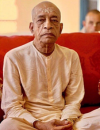
How small conflicts become big – Daksha pastime analysis 1 – Unprocessed resentment causes explosion
[Bhagavatam class on Srimad-Bhagavatam 4.4.28 at ISKCON, Melbourne, Australia]
Video:
Transcript
This is an AI-generated transcript and may contain some errors.
I’m grateful to be here amongst all of you. And I’ll try to, from today onwards for the next few days, we’ll discuss about the Dakshya pastime. And I’ll try to address a theme of how small conflicts become big.
How all small slights lead to big catastrophes. And how we can avoid them or how we can minimise them. This particular pastime of Dakshya Prajapati and his daughter Dakshayan Sati, this is told in various Puranas.
And this comes in the Bhagavatam at a very interesting point. The Bhagavatam’s heart is the tenth canto. Wherein Krishna, the most intimate, the most personable manifestation of the absolute truth is revealed.
And the Bhagavatam moves towards more and more personal manifestations of the absolute. So, for example, in the first canto, in the second canto, there is a description of Virata Rupa. Of course, in the first canto there is a glimpse of Krishna Leela which is given from chapter 7 to around chapter 15.
When Krishna disappears from the world. But the Bhagavatam moves forwards from the description of the cosmos and the study of the cosmos as a manifestation of the divine. Virata Rupa is the universe is the form of the Lord.
So, in the third canto we have the Sankhya analysis, which also is not just analysis of the material elements, but analysis of the material elements in a way that it can direct our consciousness towards the source of all those elements. Then, in the fifth canto, we have the cosmology. And especially in the seventh canto onwards, we see more and more personal Narsimhadev Pralaj, very personal reciprocation.
Of course, when Varaha is coming, it’s a huge manifestation. There’s not so much, Varahadev is not known so much with one particular eternal associate. Narsimhadev is known, Ram is known.
So many of the earlier incarnations, they are not so much identified, they are identified more for their extraordinary deeds, but not so much for their one to one loving reciprocations with particular devotees. At least that’s not revealed in the scripture. So now, in the fourth canto, this pastime is appearing.
And here, at one level, if we see throughout the pastime, there is no Krishna. There is no Vishnu also directly. Normally, most of the pastimes in the Bhagavatam are about the Lord or they are about, directly about the Lord, or about how there are devotees of the Lord and how the Lord intervenes to protect the devotees.
Now, in this particular pastime, it’s almost as if throughout from the beginning to the end, there is no direct or even indirect intervention of the Lord. Of course, indirect, we can say everything, sarvatah pani padam tat sarvatah vakshi shiro mukham. sarvatah shruti malloke sarvam avruktya tishtati.
Ultimately, everywhere are his hands and legs, everywhere are his eyes, everywhere are his ears. So, we can say, Srila Prabhupada explains in one explanation of this verse, that Krishna acts through his agents. So, svair dhorbhair asyan dharmam, one of the last verses of the Bhagavatam, it is said that the Lord destroyed disruptive elements by his own hands and by others who were like his hands.
So, Arjuna was like his hands, through whom it is destroyed, the disruptive cover was. So, in that sense, we can say the Lord is definitely involved indirectly, but there is no direct intervention of the Lord. So, what exactly is the relation of this pastime with the purpose of the Bhagavatam, which is to help Pariksit Maharaj and through him all of us fix our mind on Krishna.
So, actually the Acharyas explain that the Bhagavatam serves multiple purposes gradually. So, for example, the Bhagavatam talks about this world in a, we could say the Sankhya analysis, is this world more in static? Okay, this element is here, how can I use this element to think about Krishna? This element, how can I use it to think of Krishna? So, like that, we can think about or we can look at the world and learn about the Lord from there. But even more than the things in this world, what occupies our minds is the events.
If you look at the newspapers, they don’t so much describe objects. Sometimes some people have curiosity, okay, this building is here, this building is so old. But then it’s events that occupy our mind.
That’s what happened. The whole very popular social media app, WhatsApp, now that’s a play of the word WhatsApp. Tell me WhatsApp now, I want to know.
So, people want to know about events. So, now the Bhagavatam in this particular section describes how actually through the dramatic and traumatic event that happened with respect to Raksha’s daughter, how we can learn lessons which can direct us towards the Lord. So, the Bhagavatam’s purpose is to help us to remember Krishna.
And sometimes it’s by Krishna’s pastimes, sometimes it’s by the pastimes of Krishna’s devotees and sometimes it’s by the activities of people who are living overall in a dharmic context, even if they are not directly devoted to the Lord. Daksha himself is a devta, very important devta, but he is not directly devoted to the Lord. He is more of a punyaatma, he is a pious soul, not a devoted soul.
Lord Shiva, of course, is the greatest devotee. At the same time, Lord Shiva is often seen as something like a maverick. He is seen as outside the fold of respectable devtas, by those who have material vision.
They think that he lives in crematoriums, he applies ash on his body. What is this? So, those who are too conscious of Brahmanical purity, in a sense we could say that Lord Krishna and Lord Shiva are similar. In the sense that Brahmaji could not understand Krishna.
How can this Krishna, if he is God, how is he eating the jhuta of these cowherd boys? The food, both of them are just eating from each other’s boxes. How can Krishna eat like that? And if Krishna can do that, how can he be God? So, similarly, those who see externals, they don’t appreciate Lord Shiva sometimes. Now, Lord Shiva is known as Bhoothnath.
This can also refer at one level, that in the world, he is the lord of all living beings. More specifically, it refers to that those who are living beings in the mode of ignorance, the ghostly beings. He is compassionate to them and he elevates them.
So, when we interact with people, we all have certain conceptions about each other. And based on those conceptions, we act. So, here, Krishna and Krishna Bhakti is transcendental.
Within the world, there is a hierarchy. The hierarchy is, there are pious people, there are impious people. Or there are people in goodness, there are people in passion, there are people in ignorance.
There are various hierarchies that are present in the world. And one of the Bhagavatam’s consistent themes is that by the power of devotion, all hierarchies, whether secular or religious, they get inverted. So, we have Ambarish Maharaj and Durvasa Muni.
Durvasa Muni is renunciate and he is a Brahmana. Ambarish Maharaj is a grahastha and is a householder. But because Ambarish Maharaj is much more devoted to the lord, what happens is, in the cultural perspective, Ambarish Maharaj respects Durvasa Muni.
But from the essential or the consequential perspective, the ultimate perspective, it turns out that Ambarish Maharaj is actually greater than Durvasa Muni. And this inversion of normal social hierarchies by the power of devotion attains its culmination in the Gopis of Vrindavan, who are simple cowherd women. But they are considered the greatest devotees.
The Bhagavatam is talking about the material world at one level or at another level, as we go through this pastime, it may appear as if this person misunderstands this person, this person has a grudge against that person, and then there is an insult and this happens, that happens. It may seem to be like a mundane revenge saga. Or there are this family did this to this family and they got back and they hit them, and then they kill them and they kill them.
Sometimes this revenge saga goes on for generations. So at one level it may appear like that. But it is not like that.
Here we will see that Lord Shiva, he is revealed to be more powerful. He is of course more powerful, he is the greatest of all devatas. But his power is vindicated so much so that even Brahmaji comes and pacifies Lord Shiva towards the end of this pastime.
So the context of this pastime in the Bhagavatam is at one level we learn how from the events of the world we can direct our consciousness towards the Lord. How small things can, if they are not attended to, they can become big and they can lead to catastrophes. At another level it inverts the normal social hierarchy and helps us to recognise the power of devotion by not just comparison but by inversion.
So normally if a newspaper is to advertise itself, we have a circulation of 5 million people. Now statistics in abstraction don’t make so much sense. But if they show a bar graph, this paper has a circulation of half a million, this 1 million, this 1.5 million, this 2 million, we have 5 million.
Then, oh, it’s quite big. So by comparison, we say, okay, this is a great tennis player. How great? He has been in the world number one for the last three years.
Oh, that’s impressive. That’s good. This great tennis player, at one level we can say that by comparison, the greatness becomes seen.
But even more so by conversion, by inversion. That means if there is a big, big bodybuilder, a huge, hefty bodied person and a thin, frail person and this frail person comes and defeats that big bodybuilder, hey, what’s happening? Where did this person get the power from? So like that, that which is considered lower in the normal social hierarchy is shown as not just higher but highest in the Bhagavatam. So through comparison and through inversion, the Bhagavatam is actually inspiring us to practise devotion.
This is directly Parishit Maharaj. Yes, Parishit Maharaj had a lot of power and he renounced it all. Because at the time of death, the only power that is going to count is the power to fix the mind on Krishna.
The power to be devoted to Krishna. And that is the power of that power. And how powerful that power of remembering Krishna is or being devoted to Krishna is, that is demonstrated through various pastimes in the Srimad Bhagavatam.
In the Purport, actually Prabhupada says that Sati was an illustrious lady. She was the daughter of a great person. She was the husband of a great person.
But still her life was disrupted. And Prabhupada says the only solution ultimately is that we have to absorb ourselves in Krishna. It’s only absorption in Krishna, it’s only devotion to Krishna that can give us protection from tribulation and that can give us the highest satisfaction.
So let’s move back now and try to retrace the pastime. So when Daksha, he has at the behest of Brahmaji, he has his daughter Dakshani to be married to Lord Shiva. Now sometimes we may do something just because we are pressured into doing something.
We do something to please someone. When we do that, at one level if it is good for us, we do it and then we try to understand how it is good for us and accept it. So either we do as we desire or we need to desire as we do.
Either you do what you want to do, but if you don’t want to do that, then don’t drag your feet. If you have to do something, then do it wholeheartedly. This is the situation I am in, I have to do it and let me accept it.
Now sometimes we are just, for whatever reason, we don’t have much power over situations. So tolerance at one level means calling off our war with reality. Tolerance means calling off our war with reality.
Say if I have fallen sick and next three days I have to be in bed. I can’t go out because I have got flu, I am weak. Now why did this happen? Oh my friends are going out here, they are enjoying, they are going to this outing, they are doing this, I am missing it out.
Yes, but I have to accept it. So as long as I am resenting it, that resentment will hurt me more. So often the reality doesn’t hurt us as much as the resentment of the reality.
The flu is there for some time and okay it causes some weakness, but I am in the bed, I can do many things while I am in the bed also. I can read, I can hear, I can watch, I can use that time constructively, but if I am resenting, why, why, why, why did this happen, why did this happen? Then that hurts more. So this is the reality, let me accept it.
When we have no power except to accept, accepting gives us power. When we have no power except to accept, EXCEPT to ACCEPT. I cannot do anything except accepting.
But then by accepting I gain power. Okay, I am in flu, I will have to be in the bed for the next three days, now what can I do? As soon as I accept, then I find, okay I can do this, I can do that, I can do that. I can move myself constructively.
But now when something happens just by, okay I get fever or the weather goes bad or something like that happens, we don’t immediately see any personal cause towards it. The climate suddenly goes down, suddenly it becomes very cold. Okay, that’s just the way it is.
So, on the other hand, if some person is involved and they make us do something or they prevent us from doing something. In a sense, the environment and the person are both outside us. Both are not in our control directly.
But accepting environmental things is relatively easier when they go against us than accepting people’s actions when they go against us. There are these three glaciers, the Adhyatmik, Adhibhautik and Adhidaivik. Now among these three glaciers, we see the soul is situated in these three circles.
The circle of the body and mind, the circle of society and the circle of the material nature or environment. Now from all these circles, distress can come and from all these circles, pleasure can come. Through our relationship we can get pleasure, through our relationship we can get misery.
Like that from all three. So, among these three, the second one often is the cause of the greatest tragedy. Relationships become a source of great, great misery.
And one reason for that is with respect to the body circle and the environmental circle. Because when things happen, we don’t immediately see a personal cause. So, we may be out of frustration or helplessness, we just accept it.
But with respect to people, we think that we have the power to control them. And when we are not able to control, after having the expectation to control, that’s what causes lot of anger, lot of resentment. So, frustration is a function of expectation.
Frustration is a function of expectation. So, if the weather goes bad and I plan to go out, I can’t go out. Yes, that’s frustrating.
If I get fever and I can’t go out, that’s frustrating. But if I want to go out and somebody tells me, you can’t go. Why can’t I go? No, you cannot go.
Now if I am obligated to the person, I have to listen to that person. I may listen, but I will be seething within. Why? Why? Why? Why did they stop me from doing this? So, like that, similarly for Daksha, he had no desire for his daughter to get married to Shiva.
And he somehow, because Brahma, he was elder and Brahma told him, so he got Daksha married to Shiva. Not Dakshayani, Sati married to Shiva. And that resentment was there within him.
So, that resentment, he did not process it. As I said, either we do as we desire or we desire as we do. Okay, now this is what I have to do.
I accept it and I move on. That does not mean that we don’t have our free will, we don’t have our desires. But sometimes in life, we are required to submit our free will.
But if we do it, then this is the way I am moving forward. Let me do it wholeheartedly. Let me do the best I can.
Let me go through it. Let me grow through it and move on. But when we keep the grudges, the resentment within us, then they are like festering wounds.
Some wounds, if they are on parts of the body that are very easily visible, then they can be seen. You know, if somebody has a scar on the face or on the hands, then it may be seen easily. But there are some wounds which may be in parts of the body that are covered.
You may not see that. But whether the wound is visible or not, both wounds need to be treated. Now sometimes if the wound is visible, we may take greater effort to treat it.
Because I don’t want to look bad. I don’t want everyone to see that I am wounded. If the wound is not so visible, we may not treat it so equitably.
We may not put so much effort in treating it. But still, whether the wound is visible or not, that does not determine how harmful the wound is. The wound is always harmful and it needs to be treated.
So because Daksha and Shiva did not live close to each other, so they didn’t interact much with each other. So that Daksha’s resentment towards Shiva, towards having God and his daughter married to Shiva, that didn’t come out so much because they didn’t interact so much. In today’s world we can say they were not in the same social circles.
So their interactions were quite limited. But that resentment was still there. Now quite often, when certain emotions come up within us, we get angry at someone.
We feel upset with someone. So there is a trigger and there is a cause. And the two are different.
Trigger is the event that sets us off. But the cause, there may be many things before that happened, which led to that particular thing happening. Once a person went to a hotel and he said, I want some idlis.
So he took one idli. Give me one more. Took one more idli.
There you go. One more. Took one more.
Took one more. Bang that. Says, the fourth idli filled my stomach.
So I wasted my time eating the first three idlis. If I had just eaten the fourth idli, I would have saved money, saved time and I would have filled my stomach. Now, this is ridiculous.
That actually, the fourth idli is what gave the feeling of nourishment. But it alone is not what gave the feeling of nourishment. The three idlis that were eaten before that, the effect was cumulative.
The cumulative result came out when the fourth idli was eaten. So it’s not the fourth that is the cause of the hunger being satisfied. The fourth we could say is the trigger.
When I ate that, the stomach which is progressively getting filled, it got filled at that time. And I started getting the feeling that I was filled. So, just as this cumulative effect is there, but we get the realisation after one particular event.
All the previous events contribute to the filling of the stomach. But we get the realisation at a particular point when one particular event happens. So like that, for us, our negative feelings towards someone, they may keep building, building, building.
And there is one particular trigger that makes us explode at them. And quite often, we may see in our relationships that there is a small slide. We just, we come at a particular time and we come a little late.
And it may just be a little late, but it’s like the other person exploded like a volcano. What happened? What happened? I just came a little late, what’s the big deal? But their reaction is not just because we were a little late. Their reaction is, there are a lot of negative feelings that were there before and all of them are causes.
And this particular small action of being late, that is the trigger. So, similarly, we’ll see over here that when Daksha, he had to get his daughter married to Shiva. That resentment was one cause.
But before that, there are other causes also. He already had a negative conception of Shiva. He thought that Shiva is not a very cultured person.
He doesn’t know how to deal with people. He doesn’t know how to present himself in civilised society. And many times, when we say somebody is uncultured, that is simply a more respectable way of saying, he doesn’t respect me.
We often think of other people and generalise how they are based on how they interact with us. So, later on we’ll see Daksha, he actually says it out of sublimity. He says that, Shiva, he comes to assembly, but he doesn’t know how to respect those who are respectable.
Basically saying, he didn’t know how to respect me. So, now Prabhupada explains the purport over there that actually, Lord Shiva was just absorbed in trance. And he was meditating on the Lord and because he was meditating on the Lord and he was respectfully thinking about the Lord, he was actually respecting all living beings, including Daksha.
But Daksha had a fragmented vision. He did not see what Shiva was thinking about and he did not see what Shiva’s consciousness was. So, here what happens is that he already had a conception that Shiva is uncultured.
He lives in unclear places, he associates with unclear people. So, that basic conception he had, which itself was negative. On top of that, he was forced to do something, connect with him in a relationship which he didn’t want.
So, that added to the resentment. And then, eventually, when the sacrificial assembly took place and when Lord Shiva came and he was not respected, that became too much for him. So, slowly things were building.
And all that past history of animosity, that led to an explosion. So, for us, we all, just in the routine course of interaction with each other, will go through situations where sometimes we will hurt others and sometimes others will hurt us. Now, when this happens, we have to have an overall sense of perspective.
Means, what is my purpose? In India, if we travel in crowded locals in Mumbai or other places, sometimes it’s like the local is meant for 50 people and there are 300 people in that local. So, everybody is squeezed together. And then, in order to have some comfortable place, one person may push against another person, other person may push back.
Now, yes, both of them want to be comfortable. Now, if we are in a crowded place and somebody pushes us, we’ll actually be annoyed that the person has pushed me. But suppose, you push me, I’ll push you back.
And I push you back. You push me, I’ll push you back. And both of them keep pushing each other and their station comes and they forget to get off at the station.
Just go on pushing, pushing and the train is going somewhere else. So, that is ridiculous. Who would do something like that? But sometimes, in our relationships, if somebody does something to us, you are to be, I’ll hurt you back.
You push me, I’ll push you back. And then, when we get into that mood, we just get so caught by that, that we forget our life’s higher purpose. We’ll be chanting Hare Krishna, we’ll be coming into the temple.
You know, this person did this to me. Hare Krishna, Hare Krishna, Krishna Krishna. How can I get back? Krishna Krishna, Hare Hare, Hare Ram.
Yeah, next time. Hare Ram, Ram Ram, Hare Hare. So, even with our purpose in this world is actually to get out of this world, to attain Krishna.
But, sometimes we get so caught up in the way people have dealt wrongly with us. That you did this to me, I’ll do this to you. Our whole world gets consumed by that.
And it’s like, we come to the temple, we are meant to remember Krishna. But we don’t do that. Even when we have to do other important things, we don’t do that.
In fact, sometimes our purpose becomes getting back at the other person. You did this to me, I’ll do this to you. And that is very unfortunate.
That is very tamasic. And unfortunately, this can happen even in the devotee community. In the devotee community also, sometimes we may feel that I want to do a service in a particular way.
Somebody else wants to do a service in a particular way. And sometimes their view prevails. And then we nurse some grudge because why did this? And then next time we try to get back at them.
And then, when this goes on and on, now ultimately we are here to serve Krishna. We are here to go to Krishna. Yes, in the nature of the material world is things are limited.
So, even if we are serving the unlimited Lord, the resources available in this world to serve him are limited. So, if a service requires a particular resource, that resource has to be allotted in this way or that way. It can’t be allotted both ways.
So, now we want to serve Krishna. And actually, if we have got intelligence, we have inspiration, we would like things to be done in a particular way. But if somebody gets their way at that time, rather than resenting it, we can see that, okay, ultimately Krishna is in control.
This is what Krishna wanted. Let me try to serve Krishna according to my capacity, with what I can. So, if we get too caught in these issues, why was it done my way? Why was it done their way, not my way? Then, how to deal with this? I’ll talk in a later class, tomorrow’s class.
Because we can’t just wish away the resentments. We have to process them appropriately. But the first thing is, to recognise that those resentments, if we are holding them, they will not go away automatically.
So, it’s like, every time there is a grudge and we hold it. It’s like, one idli is eaten, second idli is eaten, third idli is eaten. And then, which grudge will cause the explosion? Which event will cause the explosion, we don’t know.
So, sometimes a small thing can become very big, because there are unprocessed hurts from the past. And that’s why, addressing those hurts is important. One way is, as I said, just by having a higher purpose in mind.
My purpose is not to just push back at the person who is pushing me. My purpose is on the train to get to the destination. So, one understanding is, I keep my purpose, I have to go closer to Krishna.
And I am here for moving closer to Krishna. So, therefore, let me see how I can do that, irrespective of whether specific services work out my way or don’t work out my way. But as living beings, as feeling beings, we are not just living beings, we are feeling beings.
Our feelings are important for us. And if things continuously keep going against the way we want, the hurt, it can become unbearable. So, how to deal with these resentments in more detail, we’ll talk in future sessions.
Today I’ll summarise what I spoke. I talked about how small conflicts can lead to big conflicts. And I talked first about what is this Daksha’s pastime significance in the Bhagavatam.
Although there is no direct intervention of the Lord or descent of the Lord in this pastime, it is demonstrating the inversion of the social hierarchy. Although Daksha was considered more Brahminical and Lord Shiva is considered like Avadhuta, but Shiva is shown to be much, much more powerful than Daksha. And also, how through the events of this world, we can learn lessons which can help us to better fix the mind and the Lord.
So, with respect to those events, I discussed how we all have particular conceptions about others. And those shape how we deal with them. So, we, when we are forced to do something which we don’t like to do, that creates resentment within us.
And sometimes our body may force us to do it, sometimes people may force us to do it, sometimes the environment may force us to do it. In these cases, if it’s the body or the environment, because there is no personal cause, the resentment is, we just accept it a little more easily. But if there is some person who forces us to do something which we don’t like, the resentment becomes concentrated in the heart.
And that if it is not processed, then multiple events of resentment will eventually cause an explosion. So, the explosion is not caused by the event that triggered it. It also is caused by all that happened before it.
Just like the feeling of being full came not just by the 4th Idli at 1-8, but all that 1-8 before that. So, either we do what we desire or we desire what we do. That means we intellectually understand and change our desire.
So, when we can do nothing except to accept, then accepting becomes empowering. Because that resentment of reality often hurts more than reality. And by accepting the reality, our energy gets channelled from resenting to doing something constructive.
Sometimes we become so resentful, you push me, I push you back. Our life and our world gets caught in getting back at people who have hurt us. It’s like two people pushing each other in a train while their destination comes and goes.
So, like that our consciousness may get so consumed in getting back at people who have hurt us that we can’t remember Krishna. We can’t do anything constructive. So, by keeping our purpose of serving Krishna in mind, we can keep small things small.
And thus focus on life’s higher purpose. But if repeatedly small things happen negatively, what to do? We will discuss in the future class. Thank you very much.
Are there any questions or comments? Yes. Ravindraji, we know that Krishna and Rama are the same. There is no difference between Rama and Krishna.
How will you explain that Lord Rama is worshipping Lord Shiva? Okay. So, why is Lord Rama worshipping Lord Shiva? There is Lord Ram who comes as the ideal human being. When Lord Ram descends, he is not playing the role of God.
Although there are sages who know he is God, but the driving question of the Ramayan itself is, is there an ideal human being? What are the characteristics of that ideal human being? So, when the book has a particular purpose, the Valmiki Ramayan doesn’t hide the divinity of Lord Ram. But it doesn’t stress it too much. Because if he is told to be God, then God can be ideal.
I can’t be ideal. So, the whole purpose of depicting Ram as an exemplary person will be lost if Ram is depicted as God. So, Ram as an ideal human being does the duties expected of a cultured human being at that time.
So, he respects the sages and he respects the devatas. See, worshipping the devatas has always been a part of the broad Vedic culture. The Pandavas also worshipped the devatas.
Lord Chaitanya Mahaprabhu, he went to Bhuvaneshwar before he went to Puri. Bhuvaneshwar is the temple of Lord Shiva. The Acharyas, their concern especially in the recent history has been because there is confusion about the supreme object of worship.
It’s not that worshipping devata, sometimes we may become excessively fanatical and we may think, we may almost treat somebody who is worshipping a devata to be like a sinful person. No, it requires piety to worship a devata. Sometimes, oh, this person goes to this Kali temple or Shiva temple.
We treat it like this person eats meat or this person does that. It’s not like that. It’s a very pious activity.
It is just that if that pious activity becomes a competitor to Krishna bhakti, then we are concerned about it. So, Lord Ram, living in a pious society, worshipped the devatas and he worshipped Lord Shiva especially because that was the culture at that time. He respected the sages, he respected Lord Shiva.
Now, if you see, if you don’t isolate that one instant from the Ramayana, we see that in the overall narrative of the Ramayana, after Ravana is killed, Lord Shiva comes with Indra and other devatas and he says to Ram that you are Vishnu incarnated and you have done all of us devatas a great favour by killing Ravana. So, even Lord Shiva acknowledges the divinity, the supremacy of Ram as Vishnu. So, another reason that is given is that because Lord Shiva, because Ravana was a worshipper of Lord Shiva.
So, in a sense, by worshipping Lord Shiva, Ram was taking permission from Lord Shiva to fight against his worshipper. Now, the important thing is that there is the activity of worship that is done and there is a conception with which it is done. We see that Krishna worships Sudama.
When he comes, he does aarti to Sudama. Does that mean Krishna is not God and Sudama is God? No, not at all. So, Lord Ram worshipping Lord Shiva is a part of his setting an example of being an ideal human being who follows dharmic duties.
In this particular verse, there is a mention of anger. So, my question is, are the devatas really subject to anger or is it just to teach us some lessons? So, are the devatas really subject to anger or is it to teach us some lessons? It is both ways in the sense that it depends on which devata we are talking about. There are Brahma, Vishnu, Shiva and these are the greatest of them, Brahma, Shiva, they are very exalted devatas.
And their actions are not just under the influence of Mahamaya. It is a plan of the Lord going on and they are sometimes orchestrated by the Lord. Now, with respect to Indra, Indra in the Rig Veda is a very worshipable being.
In the Bhagavatam sometimes Indra appears to be almost like a power infatuated buffoon. No, no offence to Indra. But if we don’t understand the context, say Indra has so much ego, he tries to destroy the Rajivasis and Krishna makes him outwit himself.
So, we may get an erroneous conception of Indra. Actually in the Bhagavatam, Indra is also a very exalted being, one has to do a lot of punya to get to the level of Indra. But in the Bhagavatam, when the process of, when the glory of pure bhakti is to be demonstrated, the Bhagavatam time and again demonstrates the contrast between attaining the heavens and attaining the spiritual world.
And shows that even those who are aspiring for the spiritual world are better than those who have even attained, not just heaven, but attained sovereignty on heaven. So, Indra’s depiction is for a particular purpose, to highlight the glory of devotion. But Indra is also an extremely virtuous and powerful being.
And in the Mahabharata if we see, Indra is depicted very very respectful. And that is there in the Bhagavatam also, when Arjuna says that, by Krishna’s mercy, I got the honour of going in this body to Indra’s kingdom and sitting on the same throne as Indra. Indra invited him to sit on the same throne with him, like father and son sitting together.
So, that respectful depiction is also there. So, the respectful understanding of the devatas is implicit in the Bhagavatam. But given that understanding, there is something more the Bhagavatam is also teaching.
So, if we don’t have that understanding of being respectful devatas, we may just get a wrong understanding of them. So, in general, especially those characters who are not malicious, who sometimes act wrongly, in the Bhagavatam, we shouldn’t judge them. We can see what I can learn from them.
It’s like say, somebody jumps from a hundred storey building to commit suicide. That person is going to die and suicide is tragic but it’s also karmic. But there is somebody who is a stunt hero and that person jumps from a hundred storey building.
Now, if that person jumps, firstly, there is going to be a security net over below in which they are going to be protected. And secondly, for that stunt, they are going to be paid. The person who is jumping to commit suicide is nothing like that.
So, when we do some wrong things and we fall, it’s like we are doing actions and we are falling. We get the consequences of that. But when the characters in the Bhagavatam sometimes do some wrong things, there is the Lord’s plan over there.
Okay. Thank you. Any other question? Yes, ma’am.
Okay. So, if somebody commits suicide, that’s normally a bad activity. It’s not to be done.
Sati has so much knowledge. And still she commits suicide. And of course, she becomes Parvati.
So, how does all this happen? Yeah. More than the action, the intention is what is important. In today’s world, when people commit suicide, it is primarily because they are frustrated with life.
They feel there are so many problems in life and they feel that there are problems in life for everyone. But from there are problems in life to life is a problem. That’s a different thing.
So, when we feel life is an unmanageable problem, then people get prompted to committing suicide. So, it’s largely because it’s by our own karma, either in this or previous lives, that we are getting the problems. And we need to deal with them and go through them.
That’s how the karmas get exhausted. But if we do some further bad karma, that’s a problem. Now, there is in the tradition, a system where one may voluntarily choose to end one’s body.
And there are various ways. One of them is called as Prayavrata. Prayavrata means that if somebody decides that whatever purpose I had to live in my life, that purpose isn’t fulfilled.
Or whatever purpose I had, it has not been fulfilled, but I have nothing more to do in my life. So, then they may voluntarily decide to starve to death. It is quite difficult.
But they often sit in yogic posture and they decide that now I am going to sit in this posture till my body falls. So, we see this repeatedly in the Ramayana also, when the Vanaras feel, when Angada and the other Vanaras feel that we have failed in the mission of finding Sita. And Angada feels that Sugriva, who killed my father, Bali, will now kill me also.
So, because I failed, we will use this as a pretext. So, he decides that I am not going to go back to the kingdom. I am going to sit here and I am going to fast to death.
So, Prayavrata is taken by people who want to, who feel their life now has no purpose, but they want to end their life in a dharmic way. So, they meditate on the absolute truth. Even Drona in the Mahabharata did that.
When the sages told him that now you acted impiously, do not fight like this. You are using celestial weapons against ordinary people. So, when he heard, he saw his father also speaking back to him.
Then he just sat on his chariot, closed his eyes and went for meditation. So, he had no more intention of fighting, he wanted to leave his body. But then Dhristadyumna came and killed him at that time.
But the point we are making is that ending one’s life is normally considered impious. But if it is done with a dharmic intention, then it can also lead to elimination. So, it’s more, as Krishna says, what we remember at the time of death.
That is what determines our destiny. What we remember is, it refers not just to specifically what fact or what we remember, but it’s what the conception of life, the consciousness of life we have developed. That is what will naturally, our recollection will naturally gravitate towards that.
So, in the case of Dakshayani, she was already an exalted soul. And her distress when Lord Shiva was dishonoured, it was not just on her behalf. It was because of her devotion to Lord Shiva that she got so upset at that time.
And because her consciousness was not just of frustration with life. It was more that her Lord had been dishonoured. So, that consciousness was very different.
And because she died while remembering Lord Shiva and Lord Shiva is not an ordinary being. So, because of that devotion, she got an auspicious destination. So, it’s like what we remember at the time of death matters.
But also what kind of karma that we have done before matters. What kind of consciousness we have. Basically, our next body is determined by what we desire and what we deserve.
So, in her case, it was not that she felt embarrassed, oh, I have a husband like this. She felt embarrassed that I have a father like this. And her feeling was that I want to serve Lord Shiva.
I want to serve my Lord. But I don’t want to serve him in a body that is defined by having come from a person who is so offensive to Lord Shiva. So, with that intention, her determination to serve Lord Shiva was unshaken.
But she felt I don’t want to serve him with this body. And that’s why because she was already very virtuous and she was remembering Lord Shiva. So, as per what we desire and what we deserve.
Those two factors, she got a body where she could serve Lord Shiva better. Okay. Thank you.
Any other questions? Yes. What is the exact past time of Lord Shiva’s death? Does anyone remember the exact past time? I remember reading it. Okay, yeah.
Yeah, I remember now. So, basically, how does, if Lord Shiva cut off the head of Brahma, then how did Brahma want Shiva to get married to Dakshayani? See, that is, there are different versions sometimes in the Puranas. But broadly speaking, it is when Brahma became very, somehow he became attracted to one of his own daughters.
At that time, Lord Shiva felt that you are such a virtuous being, how can you act like this? So, he, in order to save him from the sinful reaction that he would get, he sort of decapitated him. But then Brahma got involved in that. See, Brahma is not a vicious being.
But at that time he got that desire, that contaminating desire, he got the reaction for it and then he moved on. So, he realised, Brahma realised it was my mistake, grievous mistake on my part. And what Shiva did was simply a consequence for what I had done.
So, that’s why he did not hold any resentment against him. And normally, resentment comes when we feel that we have been, that something has been done unfairly to us. So, if we are more or less in the mode of Sattva Guna, and Brahmaji is the original Brahmana, so then, for him, if Sattva Guna, we can see knowledge, we can say, okay, this reaction came for this, so that chapter is over now, let me move on in my life.
That’s how Brahma could avoid any resentment towards Shiva. Thank you. Any other questions? Yes, go on.
Yeah. When Lakshmi Prajapati offends Lord Shiva, at that stage, Nandi Mahasaya becomes very offended that his master has been ridiculed, and he reacts and, you know, there is that exchange between the Brahmanas and Nandi Mahasaya. In situations where, you know, we are pulled into a conflict, and some seniors are involved, what should be our disposition? Can we defend the point of contention, or shall we just maintain the… Okay, yeah.
So, Nandi, when he defended, when Lord Shiva was being minimised and derided, Nandi spoke strongly against that, and then there is a whole series of curses and counter-curses, so when, if some senior devotee is being criticised, at that time, should we just maintain a neutral stand, or should we intervene on behalf of that devotee? Yeah, this is a very specific and situational question. In general, the Chaitanya Bhagavata says that if two Vaishnavas are having some differences of opinion, don’t take sides. That is a principle that is often quoted.
But we have to see, Chaitanya Bhagavata is at one level a transcendental book, but it is also a historical book. And it is addressing a particular context. The context was that after Chaitanya Mahaprabhu departed in Mayapur, there were two prominent successors, Nityanand Prabhu and… Mayapur means in Bengal area.
Nityanand Prabhu and Advaita Acharya. And somehow, among their followers, conflict started. So, Nityanand Prabhu was an avadhut.
He was not exactly a formal sannyasi, but he was an avadhut. And then he, at the instruction of Chaitanya Mahaprabhu, he got married. But some people considered that he got married, they considered it to be a lapse on his part.
And they tried minimising him. Now, Advaita Acharya and Nityanand Prabhu themselves had a very cordial relationship. Intimate associates of the Lord.
But when their followers started having conflicts, Chaitanya Bhagavata was addressing that issue. And saying, don’t take sides. Let them resolve it.
Both of them are exalted Vaishnavas. So, with respect to our particular situation, we have our service to Krishna. We have our relationship with Krishna.
And we have to see how best can I serve Krishna in this situation. Sometimes if it’s a conflict between two people who are at a far higher level than what I am, then my getting involved may simply aggravate matters. It’s like, yes, if two very senior Vaishnavas have some differences, if their followers start conflicting over that, what happens quite often is, the senior Vaishnavas, they may have their reasons for their differences, but they are functioning at a particular level.
Now, when we come into a conflict, we don’t just come into a conflict with a particular intention. We come into a conflict with a particular consciousness also. They may be in Sattva-Guna or Shuddha-Sattva and they may be thinking of how we can best serve Krishna.
But we may come into that conflict, we are in Raja-Guna and we are in Dhamma-Guna. And that’s why the conflict between two Vaishnavas is never as bitter as the conflict between the followers of the two Vaishnavas. When they get over.
Because in every conflict we bring in our consciousness. So that’s why, if it’s not directly, immediately affecting us, then we just leave it to the senior Vaishnavas to deal with it. But if we are in a situation where we know some facts, where we are actively involved in the service, where we can take a stand, not just because of our affiliation, but because of our situation.
Because we know some things, we have done the service, we have interacted with that devotee. And if we feel inspired at that time to defend, that’s fine. But we can do it in a non-judgemental way, non-aggressive way.
I’ll be talking about this in the future classes. But broadly speaking, the healthy way to deal with the conflict is to separate the emotion from the situation. How could you speak like this about him? How could you speak like this? I have my anger, but my anger doesn’t make sense to anyone else.
Because they are not coming from the same background. They can see that I am angry and I feel strongly about it, but what is my reasoning? They don’t understand that. So, a characteristic of the mode of goodness is to actually separate the facts from the feelings.
Both are important. Feelings need to be acknowledged and facts also need to be considered. But when we mix the two, that’s when the communication becomes chaotic.
So, we need to become as objective as possible. Stick to the facts. Because of our feelings, we may decide to get involved, but stick to the facts.
Otherwise, the basic principle is that, I may say I want to defend a senior devotee. There is a principle that if a spiritual master or something is criticised, we have to defend. That’s true, but no principle can be made into the absolute principle.
The ultimate principle is that we are meant to remember Krishna and we are meant to serve Krishna. So, I have to see, okay, I have to defend my spiritual master, I have to defend my senior Vaishnava. That’s fine, but I have to do it in such a way that my service to Krishna and other service to Krishna gets enhanced.
If in defending and countering and again countering and defending, if in that the whole atmosphere is going to get initiated and everybody is going to get distracted from service to Krishna, then when some things have gone wrong, the principle is that with the service attitude we try to help make things right. But if our intervention is, oh, I’m going to defend, and with that I come in with that intention, then what is going to happen is, we make things worse. So, we have to serve in a way that contributes to making things better.
And how that will be, whether that will be by non-involvement or with that involvement, that we have to pray to Krishna, consider the situation and then make a decision. Okay, thank you. So, do we have time? Yes, Pramod.
Sir, you mentioned accepting to accept from behind, also you mentioned that to tolerate, you will accept. Okay. And also leads to… Yeah, correct.
It’s a good question. So, if you keep tolerating, isn’t it that people will exploit us at some time or the other? So, what is the limit for tolerating? Yeah, we have to know the purpose of tolerating. The purpose is so that I can serve Krishna.
So, it’s like somebody is pushing me in the car, in the train. I can tolerate, okay, I don’t want to spend my time pushing you. But if that person is pushing me out of the train itself, then I have to push back, then I have to hold on.
So, it’s basically tolerance is keeping small things small so that we can focus on big things. But if the big things themselves are being interrupted, then at that time some assertive action is required. The same Bhagavad Gita, which has Arjuna, Tama, Siddhi, Kshesava, Bharata, tolerate.
The same Bhagavad Gita also calls upon Arjuna to fight a war. Couldn’t he have tolerated all the atrocities? No, that was not the point over there. He had to establish Dharma.
So, establishing Dharma means that he had to fight against those who are adharmic. So, broadly speaking, when, I’ll be talking about this in other future classes, but when we face an unfavourable situation. We have three broad options.
It’s similar to if we have unfavourable weather. Say, if I come to Melbourne, I find it very cold. I have three options.
Tolerate, mitigate or emigrate. So, similarly, when we are in a problematic situation, some person is bringing a lot of trouble for us. Those are the three options.
Tolerate, it’s not such a big thing, I’ll let it pass. Or, mitigate, we take some action. We either change the situation, try to change the person, communicate, take some disciplinary action, take some corrective action, whatever is required.
Or, if things are too complicated, just walk away from there. I don’t want to get involved in this. I’ll do some other service.
I’ll move on. So, now all three options can be done in a mood of service. So, no virtue needs to be elevated to the supreme virtue.
The supreme virtue is devotion to Krishna. And all other virtues are meant to assist us in the supreme virtue. So, tolerance, if we make that the supreme virtue, then that will become importance.
People will crush us. We don’t want that. And we will not be able to serve Krishna if that happens.
So, we have to see how best we can serve Krishna and then make a choice. But quite often, if we keep small things small, they do stay small. In that case, it’s best to tolerate.
Okay, thank you. Any last question? Okay, let’s go. You had a question.
Okay, I think I’ll just take some elaborate time. I’ll talk in a future class. But I can briefly say, yes, sometimes some people, the forgiveness does not work with them.
So, rectification is required. Like I said, toleration may not work. So, other actions are required.
I’ll talk more about this in a future class. Yes, last question. In the beginning, you spoke about Krishna possesses only 64 qualities.
So, is it that Lord Ram also possesses 64 qualities, but he manifests only 60? Or is it that he possesses only 60? advaitam acyutam anādim anantarūpam So, the first principle is advaita. They are non-different. But anantarūpam, they have many forms.
So, depending on the context, sometimes the sameness, the abheda of the various manifestations of the Lord may be stressed. And sometimes, the bheda aspect may be stressed. So, for example, when Jiva Goswami wants to establish the Gauriya Vaishnava Siddhanta, at that time, he will stress how Krishna is actually supreme.
And Krishna has, he will give verses to show how Krishna is the source of Vishnu. And he will have a lot of analytical, scriptural reasoning for that purpose. But that same Jiva Goswami, other times, offers prayers in which the name of Vishnu is there.
He doesn’t change that. In the Bhagavatam itself, in the Raas Neela, which is intimately a pastime of Krishna, the last verse is what? So, it’s Vishnu. Now, he doesn’t change it to Krishna.
He says, hey, this Vishnu has actually come from Krishna only. I remember this. So, we have to see always the context and the purpose.
So, in terms of rasa, there is that we can have very intimate relationships with Krishna. He manifests himself as a child. He manifests as friends.
Those are not seen in the other manifestations. But that does not mean that they are incomplete in any way. So, within particular analytical frameworks, which are done for a particular purpose, in certain analysis, it may be shown that Lord Krishna is greater and other forms are lesser.
But in the overall philosophical understanding, they are all supreme. By worshipping all of them, we can get liberated. And no one who is worshipping a particular manifestation of Vishnu needs to be made to feel less because they are worshipping a lesser manifestation.
It’s not a lesser manifestation. It’s the Supreme Lord itself. And this is very beautifully seen in the Brihad Bhagavatam.
In the Brihad Bhagavatam, there is a story of Gopakumar, who goes to the spiritual world, first to Vaikuntha, then he goes to Ayodhya, then he goes to Dwarka, and then from there he comes back to Vrindavan here. He practises sadhana bhakti and then he goes to Vrindavan in the spiritual world. Now when all this is happening, at that time, when he goes to Vaikuntha, first he is delighted to be in the presence of Vishnu, to be in the presence of all the Vaikuntha Vasis.
After some time he starts feeling dissatisfied. And then he says, I want something more. That’s how he goes to Ayodhya and then Dwarka.
But the important thing is, the Vaikuntha Vasis or the Ayodhya Vasis or the Dwarka Vasis, they consider that their worshipable manifestation of the Supreme is supremely attractive. And Dwarka Vasis, they think, you know, actually Vrindavan Krishna is our Krishna only. So now, they consider their Aradhyadev to be the Supreme.
And it is not that Sanatana Goswami, while describing, puts a footnote. I remember, this is their conception, but they are wrong. No.
In the spiritual world, there is room for transcendental subjectivity. In our case, subjectivity leads to wrong perceptions. My perception is different, your perception is different.
So, we all know that there is a story of, there is a picture of the old woman or the young woman. Who is it? Our subjective perceptions are different. But in the spiritual world, there is transcendental subjectivity, which is different devotees perceive Krishna in different ways, the Supreme Lord in different ways.
And their perception enhances their devotion. And that’s why their perception is the perfection for them. So, the differences between Krishna and Vishnu or Krishna and Ram, they are significant in particular context.
But they don’t have to be made into issues of confrontation. And they shouldn’t be made into absolute facts, which we need to fight over, separated from the context. They are all manifestations of Supreme.
And somebody considers a particular manifestation of Vishnu to be Supreme, then we respect them for that. If that is what is bringing them absorption in Krishna, then that is the perfection for them. So, thank you very much.