

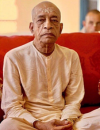
Seek not moments of bhakti – seek momentum in bhakti
Sunday feast class at ISKCON, Los Angeles, USA
Transcript
This is an AI-generated transcript and may contain some errors.
Thank you very much, Prabhupada. Gaur Bhakta Brinda! Hare Krishna! Hare Krishna! Krishna Krishna! Hare Hare! Hare Rama! Rama Rama! Hare Hare! Hare Krishna! I am grateful to be here amongst all of you at the lotus feet of the Puri Dwarka.
I seek the blessings of all the senior Vaishnavas here that I can try to speak something in the service of their lordships and Vishnu Prabhupada. So today, I’ll speak on the topic of from moments in Bhakti to momentum in Bhakti. From moments of Bhakti to momentum in Bhakti.
Moments of Bhakti means that when we approach Krishna, when we start practising spiritual life, there are times when we have some special experiences. We are participating in some kirtans and we feel some waves of ecstasy overwhelming us. Or we may take some darshan and some beautiful darshan is there, captivates our hearts and we feel very spiritually enriched.
Or sometimes we come in the association of senior devotees and we feel uplifted by that association. So all these are treasured moments of Bhakti. When the Bhakti becomes an experienced reality for us, when it becomes something which is so sublime, something which is so utterly deep and different from what we normally experience, that we feel there must be some higher reality to life.
So these moments do come to us occasionally. And momentum in Bhakti refers to how steadily we are moving forward towards Krishna in our devotional journey. So these two are related.
Moments in Bhakti and momentum in Bhakti. Sorry. Okay.
Am I audible now behind? Is it somewhat better? Thank you. So now if we see material life with all its pleasures is very alluring. But over a period of time the same thing which is alluring becomes boring.
The same thing which is so attractive, so irresistible. Like now recently iPhone, the iPhone 7 has come out. So people are captivated.
I want to purchase it. And there are thousands and thousands of people who just go rush to purchase it. But after a week of using it, it just becomes another thing that I have.
And life goes on. So in material life there is, Prabhupada writes, that most of the enjoyment is in the anticipation of the enjoyment. I think, oh, when I get this, I’ll be so happy.
When I get this, I’ll be so happy. When I get this, I’ll be so happy. But actually when we get it, there is a temporary high.
But after that, there is an anti-climax. Anti-climax. The reality hardly ever lives up to the hype.
And so there is pleasure, but the pleasure is far, far less than what we had imagined it to be. And yet, those small moments of pleasure, Prahlad Maharaj, in the ninth canto of Srimad Bhagavatam, in the seventh canto, in the ninth chapter of the Srimad Bhagavatam, he describes that those few moments of pleasure are so irresistible. Madhulavai, he says, Kutra shishashuti sukham Raghatrishni roopa Kvedam kalevaramashesha Rujam viroha Nirvidhyatena tujano yada peethi vidvan Kamanallam madhulavai Shamayan durapai So he says, Madhulavai, the drop of nectar that is there, but durapai, it is almost impossible to give up.
There is pleasure, but it is very tiny. However, that tiny pleasure is so intoxicating that we want it again and again and again. So there are moments of pleasure, and we want those moments to come again and again.
And we try to do various new things in order to get those moments of pleasure. So, we may try to get some new gadgets, some new clothes, new car, a new house, sometimes a new spouse. We try all these things in the hope of getting those moments of pleasure.
The British playwright Oscar Wilde, he said that fashion is a form of ugliness so intolerable that we need to change it every six months. So, normally we think of fashion as something very fashionable and attractive. But the same thing which is attractive today, after some time it becomes old-fashioned.
We have such old-fashioned clothes. The same thing becomes intolerable. So, it becomes not just not attractive, but becomes ugly.
And so ugly that we have to change it. Old-fashioned clothes are just discarded. Similarly, with old-fashioned things.
So, the point I am making over here is the moments of pleasure that we get in material life, they are very flickering. And in the attempt to get them again and again, we keep trying new, new things. And we hope that we will get some pleasure.
But we might get a little pleasure, but it soon ends. Now, when we come to spiritual life, when we start practising bhakti, at that time, the connection with Krishna gives us some sublime experiences. And those sublime experiences, they inspire us to move onwards in our spiritual life.
To move towards Krishna. But sometimes, we expect that just as, okay, I purchased this gadget and I felt so good. If I purchase a new gadget, I will feel good again.
So, like that, when we come to spirituality also, we do something, we feel good. And then we think, oh, I want to feel good, let me do something new. I felt good last time when I did this, but this time when I am doing it, I am not feeling that good.
So, I have to do something new. And then I have to do something new. And like that, instead of being spiritual seekers, we become spiritual shoppers.
Notice the difference between a shopper and a seeker? A shopper is one who goes from one shop to another shop to another shop to another shop, hoping that I can just get some new product, which will make me happy. Whereas a seeker is a person who persists. In the same process, we keep persisting.
In the Srimad Bhagavatam, again, in Prahlad Maharaj’s teachings, in the 5th and 6th chapters of the 7th Canto, it is said that the soul is like a buried treasure underground. And at the level of the soul, there is unlimited happiness. But that happiness can be got only when the buried treasure is excavated.
And the process of yoga, especially the process of Bhakti Yoga, is for excavating the soul. The soul is buried under various material impressions. And when we practise yoga, we are excavating the soul.
Now, if I have to dig to find gold, if I dig at 10 places, a little, little, little, we won’t find gold anywhere. But if the gold is there deep down, we have to dig at one place, again and again and again. And then, when we go deep enough, we hit the gold.
So, in the Bhagavad Gita, 9th chapter, 14th verse, it is said that, So, Prabhupada says, that the serious devotees, they always glorify me. And for the purpose of glorifying me, they are determined, determined in their practise of devotional service. They are determined to endeavour.
And they offer their obeisances to me. In this way, they always worship me. So, it is said that serious spiritual seekers, serious devotees, they are determined.
You dig at one place, it requires determination. They keep digging at one place, digging at one place. Like that, we need to focus in the practise of Bhakti.
So, the moments of Bhakti, they come of their own accord. Sometimes when we chant, we feel very good. Sometimes we chant, we may not feel so good.
Sometimes we come and take Darshan of the Lord, it’s so thrilling. It’s so thrilling, we just want to behold the Deities for more and more and more. And sometimes we come for Darshan, and we think, okay, when will this Darshanarthi get over? I have to do other things.
Sometimes when we chant Japa, I am feeling so absorbed. And sometimes we are chanting, we take our beads out. Are there 108 beads or are there 1008 beads over here? So, why is this Japa not getting over? So, this wavering of the mind will always happen.
And why does it happen? It is because the mind itself is unsteady. And if we, if our Bhakti, our Bhakti practise is based on these moments in Bhakti, whenever I feel good, then I practise Bhakti. Then we will never become consistent in our practise of Bhakti.
And if we don’t become consistent, then we don’t get purified. So, when I said, we have to excavate the gold within us, we have to reach the soul, by removing the impressions, removing the worldly impressions that are there, that is the process of purification. So, the process of purification requires consistent effort.
And when Srila Prabhupada presented Bhakti, he did talk about exalted states of happiness, for example, the Chaitanya Charitamrita, how Chaitanya Mahaprabhu was in enormous ecstasy. Srila Prabhupada describes that. And the whole Bhakti tradition is filled with saints who are in rapturous ecstasy.
At the same time, when Srila Prabhupada presented and practised Bhakti, as an example for us, he focused not so much on those extraordinary moments of ecstasy, as much as he focused on the steady commitment to the process of Bhakti. That steady commitment to the process of Bhakti will eventually lead to the purification which will make the moments of Bhakti more and more frequent and more and more deep. So, in the Bhaktir Samrit Sindhu, the Nectar of Devotion, that is, various stages of spiritual advancement are described.
And it is described that when we become advanced, we come to a level of steady spiritual emotions, Thai Bhav. But that comes when we steadily practise Bhakti. Just like if we are going up a, if we are cycling up a mountain, or up a hill, to go on top of it.
Sometimes when we are going up the hill also, occasionally we might see some beautiful sights. Oh, it looks so beautiful, this mountain looks so beautiful. This greenery is so attractive.
But if we know that right at the top of the mountain, from there the view is incredible. So, if I am paddling, when I see a beautiful view, I keep paddling. And as soon as the view doesn’t look so beautiful, I stop paddling.
Then, we will never move up. If you have to get to the top of the mountain, you know, how many nice sights I am seeing along the climb is not as important as whether I am moving up. Once I get to the top of the hill, then there is so much beautiful scenery to see.
So like that, the moments of Bhakti are the experiences that we get while practising the process of Sadhana Bhakti. But by the Sadhana Bhakti, as we get purified, we rise up the mountain. We come to the top.
When we become purified, when we become steadily attached to Krishna, then spiritual ecstasy becomes a constant state for us. And for that, for reaching the top of the mountain, how many sights I am seeing along the way is not as important as how steadily I am paddling. For going up the mountain, the momentum which I have acquired that is important.
And Sri Prabhupada in that sense was very practical. Once a person came to him and said, Swamiji, I saw Krishna in my dream yesterday. So Prabhupada replied, alright, serve him today.
Alright, serve him today. What does that mean? Yes, if Krishna has come in someone’s dream, that is fine. Now, can Krishna come in our dream? Well, we can’t stop Krishna from coming in our dreams.
It’s up to Krishna. If he wants, he can come in our dreams. But actually, if Krishna comes in our dream, that is wonderful.
But the important thing is how we grow in our spiritual life is not by what happens in our dreams, but by what happens after we wake up. You know, it is the spiritual advancement happens to the extent we use our free will properly in Krishna’s service. And in dreams, we are practically not using our free will.
It’s like we are watching a movie. So, it is when we wake up and use our free will properly that we move closer to Krishna. So, the momentum in bhakti comes when there is steady commitment.
And Shri Prabhupada stressed, he did not stress so much the Prabhupada himself was so exalted in his devotion, but he did not very frequently go into raptures of ecstasy. Only on a very few occasions, when he was singing Jai Radha Madhav or when Yadurani Mataji once asked him a question about the Goswamis and their feelings of separation, Prabhupada went into great ecstasy. But all the other times, his deep devotion was manifested not so much as emotion, not so much through emotion as through dedication.
His devotion was manifested not so much through emotion as through dedication. Now, by his dedication to the service of Krishna, by his dedication to sharing Krishna’s message all over the world, he demonstrated his devotion. So, once Shri Prabhupada was was travelling from one country to another and one of his servants, Shri Shri Kirti Prabhu, he was there and he would see that wherever Prabhupada would go, the devotees would be so ecstatic to see him.
They would be in tears. And then, when Prabhupada would leave, at that time also they were ecstatic, in tears, oh Prabhupada is going. And then, he became very morose, he thought that these devotees have so much love for Shri Prabhupada.
But I am constantly with Prabhupada and I never get tears like this. So, he asked Prabhupada about this and Prabhupada said, but you are serving me. But you are serving me.
So, it is, you know the relation, we can understand this in terms of relationship also. Any relationship that we have, in a relationship, we all experience some happiness, some fulfilment, but the stability of the relationship comes not just so much from the emotional highs that we get in the relationship, as the commitment that we bring to a relationship. The stability and the longevity of the relationship will depend, yes, we feel good in the presence of the other person, we like the way the other person is, that’s all fine, but the nature of the mind is sometimes the same person we like, sometimes we will not like.
So, the stability and the longevity of the relationship depends not so much on how we feel from moment to moment, as how steadily we are committed to the relationship. And this applies all the more to Krishna, because Krishna, when we connect with him, he purifies us. He purifies us.
The remembrance of Krishna, the service to Krishna, it purifies us and it elevates us upwards. In the Ramayana, it is described that Sita, she, when she was separated from Ram, and Ravana abducted her, and she was separated from Ram, at that time, Ravana, he had a, you know, he had no respect for the vows of marriage. So, he thought Sita is just a girl I want to move.
So, when he came to Sita, what he did first was, he came close to her, earned her trust by putting on the garb of a sadhu. And then, he revealed his real form. And then he did three things, which any boy, when he wants to approach a girl or propose to a girl, he will do.
But the only difference was, he neglected the fact that Sita was married and she was the goddess of fortune married to the Supreme Lord. He, first of all, praised Sita’s beauty. He said, there is no one as beautiful as you.
I think the creator must have retired after making you. Because he must have thought that nobody can be more beautiful than you. He was flattering her in order to soften her heart.
And then, he started speaking about his own wealth. How much wealth I have. You know, I have a golden city.
I have a golden city and in this golden city, you know, I have so much wealth. He started describing his wealth. And then he saw that Sita was still not impressed.
Then, he decided to mock his competition. So, he thought Ram is my competition. That poverty stricken man, what can he give you? You know, he has already been rejected by his own parents and he couldn’t even stop that.
Because of marrying him, you are now living in a forest. Come with me and I will give you the world’s most, universe’s most opulent palace. Now, when Sita, she paid no attention to him.
He was actually shocked. Ravana thought, what woman can resist me like this? He thought, maybe she is just stubborn. So, he abducted her.
And when he abducted her, his first plan was, he took her as soon as they landed in Lanka, he took her on a tour of his palace. Showing her all the wealth that he had, all the sides he had. All this was, he was trying to woo her.
And, as that didn’t work out, he decided to threaten her. And he told her that, if you do not, if you do not submit to me, then, I will have my cooks cook you and eat you for breakfast. He told her, I will give you one year.
Within one year, you have to submit to me. And now, he had, sometimes when police arrest some criminal and they want the criminal to give a confession, at that time, they have a standard strategy which is called the good cop, bad cop strategy. So, the good cop, bad cop strategy is, one cop comes and he threatens, beats up the person, threatens her and this criminal or accused is beaten up.
Then afterwards, the other cop comes, oh, what has he done to you? If I had known this, I would have stopped it. You know, I want to help you. But, this guy is, you know, he is very hard.
So, I want to help you and I can help you if you give us some information. So, make a statement. And then he comes and pacifies him, consoles him and then he goes off and again the bad cop comes.
So, by this good cop and bad cop strategy, they try to weaken the resistance of the accused. So, Ravana also adopted this kind of strategy. He had a good cop, a bad cop.
So, he had some rakshasis over there, some demonesses, they would go and threaten her. Now, Ravana, you know what he can do to you? How can you resist him? He will be destroyed, surrender to him. All kind of threats and frights.
And then there would be some other rakshasis who would come and what they would do is, they would tell her, you know how good Ravana is, you know what comforts he gives us, you know how much facilities he gives, how much enjoyment there is with him. So, just submit to him. Both ways, they were trying to get her to give up her resistance.
But through it all, Sita remained completely committed to Rama. So, totally committed to Rama that Ravana, he was completely shaken. Now, how can anyone resist me like this? So, Sita at this particular point, if she would have been thinking, now what am I getting in my relationship with Rama? Now, I have been abducted and there is no sign whether Rama is coming, no sign if he will be able to come also.
And she was getting nothing at that time. But she stayed committed. She stayed committed.
And by that commitment, that actually proved her devotion, proved her exalted devotion. Although at that time, in her relationship, she was getting nothing for Rama. But she was offering herself completely to Rama.
And the Ramayana, this is a historical book. At the same time, there are also meanings associated with the characters. So, just as Rama was separated from Sita, but Rama sent Hanuman.
And Hanuman came as a messenger of Rama to Sita. So, like that, the spiritual master comes as a messenger in our life. And the spiritual master reassures us.
Now, when Hanuman came, what he did was, he reassured Sita that Rama loves you. Rama is just now arranged an army. As soon as he finds out your whereabouts, he will come to rescue you.
Please have faith. He reassured her. Similarly, when we are practising bhakti, we are at present far away from the Lord.
And sometimes we feel while we are practising bhakti, oh, there are so many difficulties in life. And I am practising bhakti, but still my problems are not going away. Still the problems are there.
And it seems when I pray to Krishna also, Krishna doesn’t seem to be helping me. So, we start feeling, does Krishna really love me? Does Krishna even know that I exist? Does Krishna care for me? And when we have such doubts coming up, at that time, we may become disheartened and give up our bhakti practise. But, if we hear the spiritual master’s words, if we hear the words of scriptures, then they remind us that Krishna always loves us.
No matter whatever happens, Krishna’s love for us is unfailing and unflinching. Everybody in this world may sometimes love us, may sometimes stop loving us, or sometimes they may depart from this world and they are no longer able to express their love for us. But Krishna is always with us.
sometimes we may not be able to experience his love for us. That is simply because of our conditioning. It’s like, the light is there, it’s daytime, the sun is there, and the sun is giving out light.
But if my eyes are closed, then I may not be able to experience the sunlight. Similarly, if our vision is covered by our material attachments, then we may not be able to perceive Krishna’s love for us. But Krishna always loves us.
And he’s always there for us, by our side, eager to help us to rise to a higher level of consciousness, to experience higher happiness in our lives. And for this purpose, he never ever gives up. In the 8th canto of Srimad Bhagavatam, Gajendra prays to the Supreme Lord, O my dear Lord, I am caught in this animal shackle.
In the animal shackle. This noose, Gajendra is an elephant who has been caught by a crocodile. I’m not able to fight, I’m not able to break myself free from it.
So my dear Lord, please free me. So why should I free you? Lord may ask, My dear Lord, you are free! I am bound, so you should free me. Lord may say, You are bound by your own karma.
You have done so many bad things because of which you have become bound. My dear Lord, You are very merciful. Yes, it is by my own karma I am bound, but because you are so merciful, you will free me.
Lord may say, I have tried to free you so many times, but you were never interested. So, My dear Lord, you never get tired. No matter how many times I turn away from you, you never get tired.
So you always are there by my side. And you are always there to help me. So sometimes it may appear to us as if Krishna, does he know? Does he care? Does he hear? But that is simply a phase in our spiritual life.
Sometimes, when we are practising bhakti, sometimes the problems may become too much in our life. And when the problems become too much, we start feeling, what should I do? So it is important that we never become problem conscious. We need to stay Krishna conscious.
Krishna tells us, If you become conscious of me, you will pass over all obstacles by my grace. So, the process of bhakti, if you want momentum in it, then we cannot depend on our present experience alone. My present experience is shaped by so many things.
It is shaped by my circumstances, by my conditionings. But my present experience is not necessarily reflective of how much I have progressed in my path. If we are sick, and if we are taking a medicine, if the sickness has been very acute, suppose there are two patients in the hospital, both of them are sick.
Now, one of them has been diagnosed, and a treatment has been prescribed. Now, because the disease is acute, still even this patient is in pain. There is another patient who has not been diagnosed.
And, you know, one time I had some sickness, and for almost 7-8 months I would get fever every day. The doctors were not able to diagnose it. So, finally I went to a doctor, and I saw the doctor says, P-U-O.
So, I thought, at least something, a diagnosis has been done. I asked the doctor, what is the diagnosis? He says, no, there is no diagnosis. I saw this P-U-O.
What is the disease? They said, P-U-O means pyroxia of unknown origin. So, pyroxia is fever, and fever of unknown cause. That means they did not know anything.
They had covered their ignorance with the name P-U-O. So, what happens is, as long as the disease is not diagnosed, no treatment is possible. So, if there are two patients, one who has not been diagnosed and nothing is prescribed, and the other patient the disease has been diagnosed and the treatment is prescribed, both may be in pain, but there is a world of difference in their conditions.
For the person who is undiagnosed and no treatment is prescribed, the pain is going to worsen. Whereas, for one who the treatment is, there has been diagnosis and treatment is going on, the pain is going to lessen. Pain is going to lessen and is going to be removed eventually.
So, that is the difference between a person who is a materialist and a person who is a devotee. Materialists, they don’t know what is the problem, they don’t know what is the solution. They are thinking, if I just get more money, I get more power, more position, I’ll become happy.
So, they are actually, their situation is going to become worse. Whereas, for devotees, actually we are getting purified by the practise of bhakti. So, because the disease is there, even now we may experience some pain.
Some difficulties may be there. But, if we just keep taking the treatment, then eventually the pain will go, eventually disease will be uprooted and we will become healthy. And that’s why sometimes when we are taking treatment, if it has been a long disease, like somebody has had cancer and then they are taking treatment and they are getting cured through the treatment, but still sometimes during the treatment also, sometimes some people have an intrusive treatment like chemotherapy or whatever.
Then, during the healing process also sometimes people have good days and people have bad days. Although they are in the process of healing, still sometimes there may be some reactions in the body because of which there is too much trouble. Sometimes it’s a good day.
So, whether during the treatment process it’s a good day or a bad day, the important thing is that the disease is being removed. The cure is happening. So, like that in our spiritual practise also we are being cured of our material attachments.
And while we are going through the journey of recovery, we will sometimes have good days and sometimes have bad days. So, whether I have a good day or bad day is not as important as whether I am on the right way. If I am on the right way to recovery, whether presently I have a good day or a bad day does not matter too much.
That’s why the momentum in bhakti, how steadily I am moving onwards in the practise of bhakti, that is what is most important. And if we keep doing that with every passing day we are getting purified. With every day that we chant Hare Krishna, every day that we as per the instructions of Prabhupada, study his books, worship the deities, serve the devotees, every single day we are growing spiritually, we are healing spiritually.
We are going closer and closer to Krishna. So, this the process of bhakti is evolutionary. But the result is revolutionary.
The process is evolutionary. Slow increments, the increments are so slow that on a day to day basis they are not even visible. Sometimes there are small children, they don’t want to eat food.
So, the mother will tell them, you know, you take this milk you will develop strong muscles. And then the child takes it literally. Child drinks one glass of milk and then gets a tape to measure the muscles.
You said that my muscles will go, no muscles have grown. Why don’t you know? You have to drink milk every day. Then your muscles will grow.
So, we can’t see necessarily a daily correlation between our spiritual practises and our spiritual growth. It’s not so linear, it’s subtler. There is a correlation but it’s subtle, it’s not immediately visible.
But just as a child who keeps eating healthy food over a period of months and years, the child grows. Similarly, if we keep practising bhakti steadily, we grow in our spiritual life. And that growth is evident more through the change of values than the change of desires.
The change of desires means oh, I like this, I used to have this desire, now I don’t have this desire. That can happen but more study is change of values. Sometimes you may feel, you know, I’ve been practising bhakti for so many years and still I sometimes get the same greed, same anger, same lust.
Am I getting purified? But actually the process of bhakti, it works in the sense that maybe before I started practising bhakti now we would welcome lust. We would call greed as anger. No, greed as ambition.
People call anger as power. Now we would welcome these things but now when these things come you say, I don’t want this, why is this coming? So this, this is a change of value. The desire may still come but earlier we would have welcomed the desire, now we want to get the desire out of our consciousness.
So change of value is actually a more enduring sign of spiritual advancement than change of desires. Desires may just pop in from anywhere, they’ll pop in and they’ll go if you don’t dwell on them, if you don’t act on them. But our attitude towards the desire, that desire changes.
So our spiritual growth is seen in our change of values. And this change of values is something which is steadily happening as we are practising bhakti every day. So the process, its end result is revolutionary.
And that’s why the important thing is we just keep practising the process steadily. The momentum in bhakti is far far more important than the moments of bhakti. What I experience on a day to day basis is not as important as how steadily I practise the process of bhakti.
And by the practise, in the process of bhakti actually what we are doing is we are making our mind habituated to focussing on Krishna, habituated to serving Krishna. And when we are practising bhakti does, actually what, I’ll conclude with one example of this principle of commitment and of momentum and moments. Suppose there is a small child maybe a small girl, and she is sick.
And when she is sick her mother takes her to a doctor. Now the doctor and she sees the doctor, doctor sees the child doctor may smile at the child, maybe pat the child maybe give some toffee. Just be nice to the child.
And then all the serious business the doctor will do with the mother. Okay, she has got this disease, you have to give her this medicine. This in the morning, afternoon evening, this morning evening.
Now all the serious business he does with the mother. And then the doctor is not going to be with the child or the mother always. The mother and the child go back home and after that, it is the mother’s responsibility to make sure that the child takes the medicine.
The child may just be naughty, this doesn’t taste good. So the mother gives the medicine and says, no I don’t want to take the medicine. I don’t want to take the medicine.
Mother may have to hold the mouth, take the medicine. So now, if the mother thinks that, oh giving the medicine is a ritual. So what happens? The mother takes a bottle, takes some, one spoon of medicine out from the bottle, puts it on a spoon, puts it near the mouth of the child and she pours it.
The child is moving the head. The medicine all spills out. Everywhere else.
And the mother says, well last one month morning, afternoon, evening, I have been giving the medicine to the child. The child is still sick. Well, giving the medicine is ensuring the medicine goes inside the body.
It is not just pouring it out of the spoon or pouring it out of the bottle. So, similarly, in this metaphor, actually in this analogy, the doctor is like the spiritual master. The sick child is like the mind.
And our intelligence has to be like the mother. And the medicine is the holy name. Medicine is the remembrance of Krishna.
It is the commitment to the process of Krishna Bhakti. So, now the spiritual master or spiritual guides, when we meet them, they are cordial, they are warm, they are gentle, they are loving. It’s nice.
It’s like a doctor is nice to the child when the doctor sees the child. But the spiritual master, we don’t go to a doctor just to get a smile from the doctor. You know, oh, the doctor smiled at me.
The doctor is so nice. When we go to a doctor, we go to understand the disease and get the treatment. Similarly, when we come to a spiritual community, a spiritual community is not just a social club where everybody is so nice to each other.
Yes, we should be nice to each other. It’s not that we should be harsh to each other. But that’s not the primary purpose.
We come that the doctor should be nice to the child so the child is not fearful, the child feels comfortable. But the serious business of the doctor is with the mother. The doctor explains to the mother what is the disease and how to take the medicine.
Similarly, the spiritual society, the serious business is the philosophy, is the understanding of what is wrong and how we are to set it right. So, that serious business is done with the intelligence. Just as the doctor speaks to the mother, not to the child.
Similarly, the spiritual master’s message is primarily spoken to the intelligence. Srila Jiva Goswami, in his Satsang Dharmas, he describes that when a devotee is purified, when a devotee is siddha, the siddha bhaktas, they, the perfected devotees, they practise bhakti because of their priti. Because they love Krishna, so they naturally practise bhakti.
But he says for the sadhakas, the sadhakas stay in bhakti not by their priti but by their buddhi. Not by their love for Krishna but by their intelligence. So, at our stage, if we think, I will serve Krishna because I love Krishna.
What will happen is, I feel I love Krishna today and tomorrow, maybe I need something else. So, our mind is so flickering. So, at our stage, we will stay fixed in bhakti not based on priti but on buddhi.
So, with our intelligence, we understand, this is important, this process of bhakti, it will purify me. Even if I don’t feel so happy right now, once my love for Krishna awakens, then there is the ultimate happiness there. In selfless love for Krishna, there is the supreme enrichment of the self.
And when we understand this with our intelligence, then we become fixed in the practise of bhakti. And that’s why Sri Prabhupada, he said, just chant Hare Krishna and be happy. Now, chant Hare Krishna and be happy, is this one instruction or are these two instructions? Is it a causal thing? You chant Hare Krishna and you’ll become happy? Or is it, chant Hare Krishna, that is one instruction, and be happy, is another instruction? Now, what is it? Actually, it is both.
Atavai kavayo nityam bhaktim paramayam Uda vasudeve bhagvati kurvanti atma prasadinim In the second chapter of the Bhagavatam, first canto, in the 19th verse it is stated that, Atavai kavayo nityam, the wise people, bhaktim paramayam Uda, they joyfully practise bhakti. Vasudeve bhagvati kurvanti atma prasadinim. By the practise of bhakti, it brings joy to the heart.
So, what this verse is very curious, what it is saying is, they joyfully practise the bhakti that brings joy. So, now, what is it saying? Is joy at the end of bhakti, or is it in the practise of bhakti? They joyfully practise the bhakti that brings joy. What this means is that, when we are sadhakas, when we are practising bhakti, we may not always experience joy.
But, if we have proper philosophical understanding, then we will know that we are on the path to supreme happiness. After many lifetimes of being lost in this world, trying out various things for happiness, now at least we have come to the path of happiness. Path of ultimate happiness.
The path of ultimate auspiciousness. And that itself will make us happy. Just like a patient who has been sick for a long, long time, and has tried various treatments, none of which work, has finally found a treatment that works.
That patient is not yet healed, but that patient is still happy. At least I have found a treatment that works. So, that is the happiness.
So, chant Hare Krishna and be happy. We can see that in the sadhaka stage as two separate instructions. I chant Hare Krishna, and that I have got the opportunity to chant Hare Krishna, that I have got the opportunity to practise bhakti, because of that I am happy.
And as we keep doing it, as we keep practising bhakti, as we become more and more purified, chanting Hare Krishna will also make us happy. So, at our stage, whether we become happy or not, we chant Hare Krishna, and we try to cultivate a joyful disposition, try to cultivate a grateful disposition. And in that way, when we practise bhakti, then we will eventually become purified.
Just like the mother, when she ensures that the child takes the medicine, the child will become cured. Like that with our intelligence, when we ensure that we stay fixed in Krishna bhakti, then we will become purified and will experience supreme satisfaction. That comes atma prasad.
Complete satisfaction of the heart, that comes when we become purified and absorb the love for Krishna. That is what Srila Prabhupada has come to give us. And what we need to do to get it, is just to open our hearts and stay connected with him as long as it takes, throughout our life.
And if we do that, seeking momentum in bhakti, trying to move onwards towards Krishna, then the moments of bhakti will come and go. Sometimes they will be there, sometimes they will not be there. As we move closer and closer to Krishna, these moments will also become more and more frequent.
And they will become more and more intense. And joyfulness will become our steady state of existence. I’ll summarise.
I had spoken on the topic of, seek not moments of bhakti, seek momentum in bhakti. So, that all of us when we start practising spiritual life, sometimes we may experience some intense joy. And that’s wonderful.
But other times we may not experience that joy. If that joy is our only parameter for practising or not practising bhakti, then essentially, we develop a materialistic attitude in spiritual life. In material life, we are always looking for something new to get a new experience.
New gadget, new house, new car. Like that in spiritual life also, we want to explore new things. Try this path, try that path, try that path.
We don’t remain spiritual seekers, we become spiritual shoppers. And then we can’t go very far. To grow in spiritual life, to attain spiritual happiness, we have to excavate like a hidden treasure.
And for that, we have to consistently dig at one place. Consistently practise the process of bhakti by which we will be able to excavate the soul from within us. And for that purpose, Yatantasya Dhrudavrata, the great devotees, practise bhakti with determination.
Prabhupada showed this example. Although he was so exalted in his bhakti, he did not, he was not effusively ecstatic all the time. He was soberly committed all the time.
And that was the example by which he was able to make such phenomenal contributions for so many devotees and set a movement which will carry on the legacy of bhakti for thousands of years. And when we are practising bhakti, when we have our dark moments, when we go to distress, it is not that Krishna doesn’t care for us. Krishna is there and Krishna loves us.
And he is there right in our heart. And if we just persevere, we will see that he will remove the darkness and he will bring the light in our life. Just as for Sita, it was a dark, dreary night of the soul when she was abducted and taken away from Ram.
And although she was allured, she was threatened, subjected to so many things, still she remained faithful. Just as Lord Ram, even before he came, he sent Hanuman as a messenger. Like that the spiritual master is the messenger who comes to us and reminds us of Krishna’s love for us.
To the extent we keep hearing the philosophy, to that extent we will stay inspired in our bhakti. Just like when we are climbing up a mountain, how nice is the sight along the way is not as important as whether I am steadily going up the way. Once I get to the top, there is a wonderful sight to see.
So how good we feel right now is not all that important. As long as we are moving on the right way. Just like a patient who is recovering from a painful disease with a good treatment.
Sometimes they may have good days, bad days, but they are on the way to recovery. Like that in our practise of bhakti also we may have good days, bad days. But if we keep practising, we will be recovering.
And taking this medical analogy, medicine analogy forward, said that the spiritual master is like a doctor. Our mind is like a child. Our intelligence should be like the mother.
And the process of bhakti is like the medicine. And to the extent we take that medicine steadily, hearing the spiritual master, then we will become purified and as we chant Hare Krishna and be happy, it is both causal and parallel. By chanting Hare Krishna we are getting purified, ultimately we will become happy.
But while practising the process of bhakti, even if we don’t feel happy right now, we are happy that we have got the process to happiness. Just like a patient may not be fully recovered, but I am happy that I am on the path to recovery. I am on the path to health.
Like that when we joyfully practise the process that brings eternal joy. Thank you very much. Hare Krishna.
You can have a question and answer period. Yes, please. Any comments or questions? Yes, ma’am.
Thank you for a wonderful conversation. In your moment, in the momentum of bhakti, could you share some of the challenges you had that might not have been known? In the momentum of practising bhakti, can I share some of the challenges I have had Well, for me the major challenge has been always sickness. I have had lot of sickness and what I have found is that somehow when we fall sick, there are two choices.
I sometimes write poetry. I once wrote a Hindi poem. Just tell that and I will translate it to English.
Aaye sankat to hua sakshatkar Bina bhakti ke kaisa karta inhi paar When the troubles came, I realised that if I had got these troubles and I had not the shelter of bhakti, I would not have been able to deal with them. So, once I was terribly sick and I had been sick in a hospital for one and a half months and I was feeling and the disease itself was not diagnosed. So I was feeling very frustrated by that.
But then I I had my computer with me. I started writing something and I was so disheartened at that time that I felt that I cannot write. I cannot speak anything.
So I was in a hospital and some devotees asked me to give a class. So I was giving a class on Skype and I was speaking on the six opulences of Lord Chaitanya Mahaprabhu and while I was speaking there at that time I just became so absorbed I closed my eyes. It was an audio class, not a video class.
We did not have that much good internet. So with my eyes closed, I was speaking and I became so lost in speaking that the Skype got disconnected and I didn’t realise it only. The Skype got disconnected.
It was a Skype lecture I was giving and the Skype got disconnected and because I was giving a class, I had kept my phone also on silent. So those devotees were calling me back. Their internet had gone from their side.
They were calling. So the phone had got disconnected. I just kept speaking.
I kept speaking and they were calling I was not picking up the phone. So almost after 15 minutes I opened my eyes. I just looked at my phone.
There were 8 missed calls. And I looked up and I saw the Skype connection was gone. I felt irritated.
I was speaking for 15 minutes. It’s just a waste. But then somehow the next moment it struck me that when I was speaking about Krishna, I was absorbed.
I was absorbed in speaking about Krishna. And then it gave me the realisation that for speaking about Krishna, I don’t need an audience. For speaking about Krishna, I don’t need an audience.
I speak about Krishna, I can become absorbed myself. And it was that time that I started the whole area of online outreach. I started answering questions on audio.
I started giving lectures, audio lectures. Then I designed online courses. Then I did the Bhakti Shastri course.
So, basically, that was a moment which somehow I could have got frustrated. I wasted 15 minutes. But it was Krishna’s mercy that the thoughts went in another direction and I thought, oh, even if I am in a hospital, I can speak about Krishna.
Even if people are not here, if I speak about Krishna systematically, if I design some courses, then there are people who will be hearing it later on. So, for me, I saw that sometimes in our life, because of circumstances, some doors get closed. And some forms of service, so before that I was quite actively travelling.
Just recently I started travelling again. But at that time I was quite actively travelling and because of sickness I was not able to travel. So, sometimes when one door gets closed in our life, we get so angry, we keep glaring at that closed door that we don’t even see that another door is opening in our life.
So, that’s how it happens that sometimes when we are trying to practise bhakti, we may have difficulties. But I found that if you just try to maintain an attitude of service, Krishna opens some door or the other for us. That’s my small experience.
Yes, sir, you can speak. My question, not to speculate, regarding around the drink… Yeah, I’ll repeat here. My question is not a speculative question, but it’s more… What would you say to someone who, before 13 and after a long period of time, realised that these were actually wartimes of the future? That wasn’t the original intention.
It’s hard to prove to the population that this was coming true. So, they would have to go to that area to find out if it’s coming true. What would be the advice that you would give to someone being vulnerable to either Indian God giving them something that’s future or something that’s the future that’s coming and they don’t know how to deal with that? We can use it properly to prepare for it, but we don’t have to obsess over it.
Just keep making sure that we make wise choices when we are awake. And, you know, our destiny is determined much more by the choices that we make in our wakeful state than whatever happens to us in our dreams. Yes, any other questions? Yes, please.
You mentioned spiritual shelter, spiritual secret. Yeah. And, can you name some of the symptoms and qualities of a person whose mind and spirit has already been recuperated after you make the appointment with a person that is not sick anymore, that is spiritually satisfied, and not thinking that it’s not a common thing for a person to say, oh, I got a job, I got a wife, I got money.
Everything is working good. Actually, whatever I ask him, it seems like this is it, this is my resuscitation, he’s giving me what I need. But in the case of somebody being sick, so how, my question is, can you name some characteristics and some qualities of a person who actually is enjoying spiritual healing, that they actually derive the benefits of that? Okay.
Yeah. So what are the characteristics of somebody who is spiritually cured? Sometimes people may feel that if I am materially comfortable in my life, then God is reciprocating with me. And they may think I am satisfied over here.
Yes. See, Krishna’s reciprocation can come at multiple levels. So the, bhakti, pareshaanubhava viraktiranyatra ca.
The Bhagavatam says that bhakti is the process that gives paraisyanubhav, the experience of that Lord, Isha, who is transcendental, who cannot be experienced by our senses. And when we experience the Supreme Lord, then what happens? Viraktiranyatra ca. We become detached from other things.
Now detached doesn’t mean that we don’t care for those things. But rather that we don’t depend on those things. As long as we live, we need material things.
But our sense of identity, our sense of self-worth, our sense of security doesn’t come from our material side when we are spiritually sheltered. So, broadly speaking, we can’t look into people’s heart to know how much love for Krishna they have, how much spiritual realisation they have. What we can see is their external life.
And so we can see how committed they are to the practise of bhakti or to the practise of spirituality and how how less invested they are in the inworldly things. Now Srila Prabhupada is an example if we take. Now when Srila Prabhupada was in India, India 50 years ago was a pious country, much more than what it is now.
So Prabhupada is a renunciate. He had a reasonable amount of respect in his own country. But when he came to America, he came to a place where people had no respect for asad.
So in one sense, Prabhupada gave up everything that was there, that was valuable for coming to America. And he had nothing when he came here. But what brought him here was his attachment to Krishna.
His desire to share Krishna’s message with others. So broadly speaking, how much a person is attached to Krishna and how much a person is not worried about material ups and downs, material things. That is a broad characteristic of one who is spiritually healed.
Thank you. Hare Krishna. Okay.
So what is dharma? What is the principle of dharma, especially for somebody who is a householder in this world? See, the word dharma essentially, it has many meanings. One of the meanings is, it refers to nature, inherent nature. So, whatever is our inherent nature, that is actually our dharma.
And at our deepest core, we are souls. And the soul’s nature is to love and serve. And we try to fulfil this nature to love and serve by relating with different people, forming different relationships, having a family, having spouse, having children.
We try to have a loving-serving relationship and get some satisfaction. Now, these relationships, they can bring some fulfilment. At the same time, they are temporary.
So, we need a vertical relationship with God, with Krishna. And the process of bhakti is such that bhakti is actually inclusive. That means, we devote our dharma is at one level to practise bhakti, wholeheartedly.
So, we chant the holy name, that is yoga dharma. We come in satsangh, like we have come now, or we come and take darshan of the deities. These are directly devotional activities.
This is paradharma, this transcendental dharma. And along with that, there is aparadharma. Aparadharma is our worldly duties.
Now, worldly duties, they can also be done in a mood of service to Krishna. So, for example, if I see my family members, not as my family members, I see them as they are also Krishna’s. And Krishna has entrusted them in my care.
And therefore, let me try to serve them and express my affection of them in a spiritual, God-centred way. So, broadly speaking, the dharma is holistic. That if whatever is position we are in our life, we connect ourselves with Krishna.
And we connect ourselves with Krishna directly through direct devotional activities and indirectly through the service attitude that we bring in our various worldly activities. So, we see that, okay, I am in this worldly position, in this family, in this job. And ultimately, this is the arrangement of Krishna.
So, let me serve Krishna over here. So, if we develop this service attitude, then we can live dharmically in all aspects of our life. But to develop this service attitude authentically, we need to give adequate time for direct devotional activities.
Now, that means chanting the holy names, coming to the temple. When we do these direct devotional activities, then Krishna enters into our heart. And once Krishna enters into our heart, then actually we can contribute, then we can take that Krishna who is in our heart and infuse a mood of service in all our other activities also.
So, it is said that we want to, in the process of bhakti, which is the highest dharma, that is meant to, we want to bring Krishna in our heart. We want to give our heart to Krishna. But our heart is presently given to so many other things.
For example, our heart is caught with lot of thoughts about money. So, the idea is, if I can’t give my heart to Krishna, then I give what is in my heart to Krishna. If I can’t give my heart to Krishna, then I give what is in my heart to Krishna.
So, for example, a primary attachment is to money, artha. And the Bhagavatam describes that the artha is purified by dana. Money is purified by charity.
So, when we do our work and when we give a part of the fruits of our work to Krishna and charity, then what is happening is, because that money is dear to us, when we give it to Krishna, we give a part of our heart to Krishna through that. And then Krishna gets a place in our heart. So, broadly, by direct devotional activities and by indirectly cultivating a devotional mood and offering the fruits of our result to Krishna, we can actually practise dharma in the householder life also.
Yeah. Yeah. Okay.
So, when I talked about two kinds of bhakti, priti bhakti and buddhi bhakti, in terms of the end results, is there any difference? No, I was not talking about two types of bhakti. I was talking about two levels in bhakti. It is by practising bhakti through buddhi that eventually we will come to priti.
So, it is like priti is a higher level and buddhi is a lower level practise. In the sense that at the level of buddhi, we don’t have so much love for Krishna. But with our intelligence, we understand that Krishna bhakti is auspicious.
And therefore, I will practise it. And by doing this, 12.9 in the Bhagavad Gita, Krishna says that if you cannot directly absorb yourself in me, then do abhyas. Try to fix your mind on me.
If your mind is not naturally absorbed, if the mind goes away, bring it back. Bring it back. So, this is sadhana bhakti.
And he says by doing this, your desire for me will grow. Your attraction for me will grow. So, by doing bhakti with our buddhi, we will come to the level of doing bhakti in priti.
Do we have time? Okay. So, we talked about the momentum in bhakti. So, my question is, can we use that momentum by maintaining steadying in bhakti? So, say if I want to devote one hour of my time in bhakti, so, what aspects will play a key role here in bhakti? So, what would you suggest to a person who wants to devote one hour in bhakti? What would be the end result in that one hour? So that he can grow maximum desire.
Okay. Yeah. So, somebody can devote one hour daily for practising bhakti.
Which devotional activity should they do? See, on a daily basis, the most important activity is chanting the holy names. Because the holy name is like the most accessible and portable form of Krishna. You know, we have to come to the temple to see the deities.
But Krishna as the holy name comes with us. Not only to our home, he goes with us wherever we are. He is able to reside on our tongue.
So, that Nama Seva, Hari Nama Japa, that is the most important activity in this yuga. That is the yuga dharma, chanting the holy names. So, that is the activity which we need to do on a daily basis.
Now, along with that, to do this activity regularly with inspiration, we need association. We need intellectual conviction. The intellectual conviction comes by studying scripture.
So, studying Bhagavad Gita, studying the Bhagavatam, studying the books of Srila Prabhupada. Those give us the conviction to keep going on. So, if I am chanting, after some time, if I am not rearing about the philosophy, then I think, what is the uttering of the words? I will do it for some time.
Afterwards, I start doing half-hearted. It’s like, I am just like the mother is pouring the medicine but the child is looking elsewhere. The medicine now goes down.
It doesn’t go in the… So, like that, inattentive chanting will become boring. And we will give… First it will become boring, then it will become burdensome and then we will give it up. So, chanting alone is not… Although chanting alone is potent enough to purify us and liberate us, but we will not absorb ourselves in chanting adequately to experience its potential purification.
That’s why we need intellectual conviction and that comes by scriptural study. So, regular scriptural study is also important. And, I would say, most important is regular association.
So, once a week at least, like we have the Sunday feast programme or we have some programme close by. Without association, we will not be able to sustain anything else. So, I wouldn’t specify exactly how you distribute, but if you have 1 hour per week per day, so it’s like 7 hours per week, then we need to at least spare 2-3 hours in a week to come in the association of devotees.
And in the remaining time, we can decide how much to chant, how much to study scripture, but without association, we are ultimately social beings and we need to see others who are also practising bhakti. So, our desires are not just linear, they are triangular. Triangular sometimes you think desire means I see an object and I desire that object.
I see some new object, I want to buy that object. That’s how we think our desires come. That is true, but that is not the only way desires come.
So, linear means I am here, the object is here, I get the desire for the object. But, our desires are also triangular. Triangular means, say, now there is this craze for this video game, you know, Pokemon Go.
Now, when the game came new, some people say, what is so special about that game? They will not pay much interest. But then they see a friend, you know, completely pressing, lost in it. And they say, what is so special about it? Let me see it.
And they start playing it and they also get lost in it. So, what has happened? Just by hearing about the game, the desire did not develop. What happened is, they saw someone playing the game and on seeing them playing the game, the desire developed.
So, the desire is not just linear, it is triangular. Between me, the object and somebody who already has a desire for the object. So, bhakti, in bhakti, our spiritual desires, they mostly develop triangularly, not linearly.
That means, when we associate with devotees who are eager to chant, it is just by chanting the holiness, we may get some taste. But that taste will not last for long. Because our mind always keeps going up and down.
But if we see some devotees who are chanting seriously, by their association, we feel, yes, I must do this. If we see devotees who are eager to study the Bhagavad Gita, see this Bhagavad Gita is a nice book, I read it, it’s over. But we see some devotees who read the Bhagavad Gita every day and they are so eager for understanding its wisdom, sharing its wisdom.
Seeing their desire brings desire for us. So, the association of devotees is the most important. Although chanting is the most potent, but for sustaining the process of Bhakti, association is the most important.
So, if we associate, then our desire for chanting, our desire for Krishna Bhakti, that will be sustained and that will increase. And that’s how we’ll move onwards towards Krishna. Okay? So, thank you very much.
Thank you very much.